First Editions · Impossible Creatures
First Edition Guide
A guide to the first edition, first printing hardbacks and paperbacks of the Impossible Creatures series: what physically distinguishes each one, and the ISBN to check it against. Signed editions, retailer exclusives, sprayed and printed edges, and the independent bookshop variants.
Reissues and book club editions are outside the scope of this guide. Where an ISBN is listed below, it identifies the release described in that entry. The number line on the copyright page is what confirms a first printing, and the section below explains how to read it.
How to tell a first edition from a first printing
Almost every copy of Impossible Creatures on the secondhand market is described as a first edition. Most of them are. The book is still in its first edition and has been through many printings of it. Edition and printing are different things, and only one of them is scarce.
Edition means the setting of the text. A new edition is a book reset with changed content: a new introduction, revised text, a different translation. Impossible Creatures has not had one, so every trade copy is a first edition. Printing means one run off the press. The first printing is the batch that existed before anyone knew whether the book would sell. That is the scarce one. So first edition, tenth printing is a correct and honest description. It is also not a first printing.
1. The number line
The row of digits on the copyright page, usually near the bottom, reading something like 10 9 8 7 6 5 4 3 2 1. The lowest number present is the printing. A line ending in 1 is a first printing. When the publisher goes back to press the lowest digit is stripped, so a line ending in 2 is a second printing. Some lines are set in a scattered order, but the rule is the same: find the lowest digit. This is the primary test, and everything below supports it.
North American printings vary the format. The Canadian Puffin paperback runs its line upward and pairs printing digits with year digits, 1 2 3 4 5 29 28 27 26 25, where the 1 is the printing and the 25 is the year of that run. The US Yearling paperback uses the familiar descending line, 10 9 8 7 6 5 4 3 2 1. Either way, find the lowest printing digit. One warning: the AI and text and data mining reservation described below sits on North American first printings, confirmed on both the Canadian Puffin and the US Yearling copies in hand, so the UK dating shortcut does not transfer to them.
2. The publication statement
A first printing states the year of first publication with no later printing history attached. Once a book has been reprinted across years, the copyright page often grows a line recording it. If reprint years are listed, it is not a first printing, whatever the number line says.
3. The printer imprint
UK copies name the printer near the bottom of the copyright page, for example CPI Group or Clays Ltd. Publishers move a title between printers as demand shifts, so the printer named on an early printing often differs from the one on later runs. On its own it proves nothing. Alongside the number line it is a useful cross-check, and it is often the fastest way to spot a copy where the number line has been misread.
4. The AI and text and data mining clause
Following the EU copyright directive, publishers began adding a reservation to the copyright page stating that the work may not be used for text and data mining or for training artificial intelligence systems. Bloomsbury wording runs along the lines of “No part of this book may be used or reproduced in any manner for the purpose of training artificial intelligence technologies or systems”.
The clause did not exist when the earliest printings went to press. On this title the split is confirmed in hand. A first printing of the 2024 paperback carries the number line 2 4 6 8 10 9 7 5 3 1, no AI or TDM reservation, CPI Group (UK) Ltd as printer and no product safety contact line. A tenth printing carries a number line reading simply 10, the full AI and TDM reservation citing Article 4(3) of Directive (EU) 2019/790, Clays Ltd and Elcograf S.p.A. as printers, a product safety contact address and a cover illustrator credit for Daniel Egnéus. Four markers moving together, which is what makes the copyright page worth reading rather than skimming.
Treat the clause as strong supporting evidence rather than proof on its own. It dates the boilerplate rather than the press run, and the printing at which it appears varies between titles. A copy with a number line ending in 1 that also carries the clause is not necessarily wrong, but it needs looking at properly.
5. Advertisements and endmatter
The last pages and the inside covers date a copy cheaply. A printing advertising a book published in 2026 was obviously not printed in 2023. Series adverts, also by the author lists and coming soon pages are refreshed between printings, and they are frequently the giveaway on a copy where someone has described the number line from memory.
What tells you nothing
The ISBN. It stays the same across every printing of an edition, and on the Waterstones creature paperbacks it is shared with the standard paperback too. An ISBN identifies a product, not a print run. The price. Cover prices are reprinted and sometimes revised, and stickers mean nothing. A signature. A later printing signed at an event is still a later printing, and an unsigned first printing is still a first printing. The words first edition on the copyright page. True of every printing of this book.
The order to check in
Number line first: the lowest digit is the printing. Then the publication statement: any reprint history rules it out. Then the printer imprint and the endmatter adverts: do they fit the date the number line claims? Then the AI and TDM clause: present or absent, and does that agree with the rest? If all four agree, it is a first edition, first printing. If they disagree, photograph the copyright page and ask before you buy or list.
Impossible Creatures · 2023
The book that started the series and won the Waterstones Book of the Year 2023. It is the most complicated title in the series to collect, because two separate Waterstones exclusives exist, made either side of the award. The first came before it. The second was created afterwards, carries the award banner on the jacket, and has its own ISBN and therefore its own first printing.
★★★★½ Our review of Impossible Creatures Read it →UK Editions
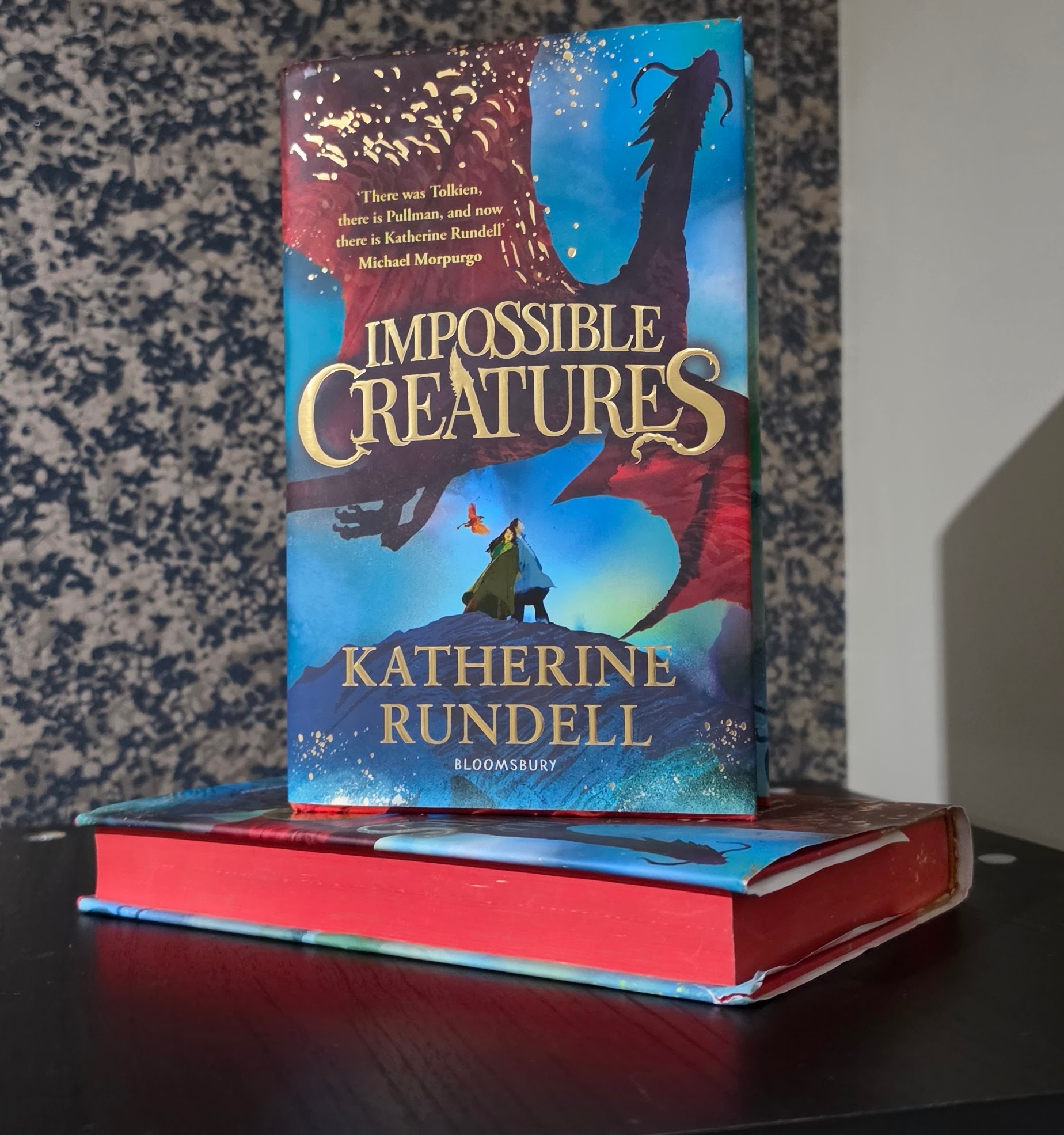
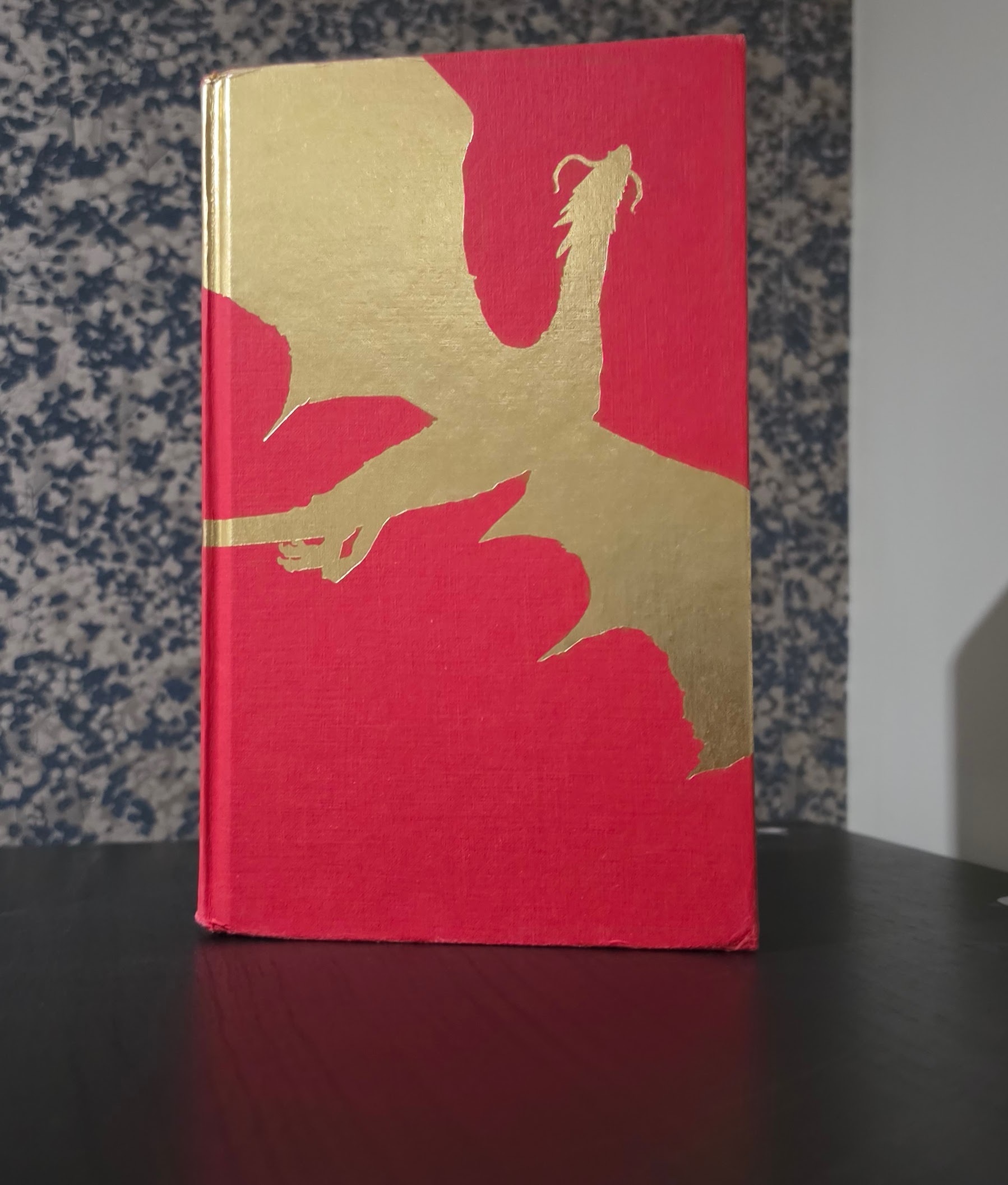
The scarcest of the Book One editions. Hand-signed, sprayed edges and gold foil, sold only through independent bookshops. The book itself carries the standard trade ISBN, so it cannot be verified by number at all. Indie bookshop websites often append an S to the listing to mark the signed edition, but that S is a shop convention and never appears on the barcode. Photographs of the signature, the sprayed edges and the foil boards are the only proof.
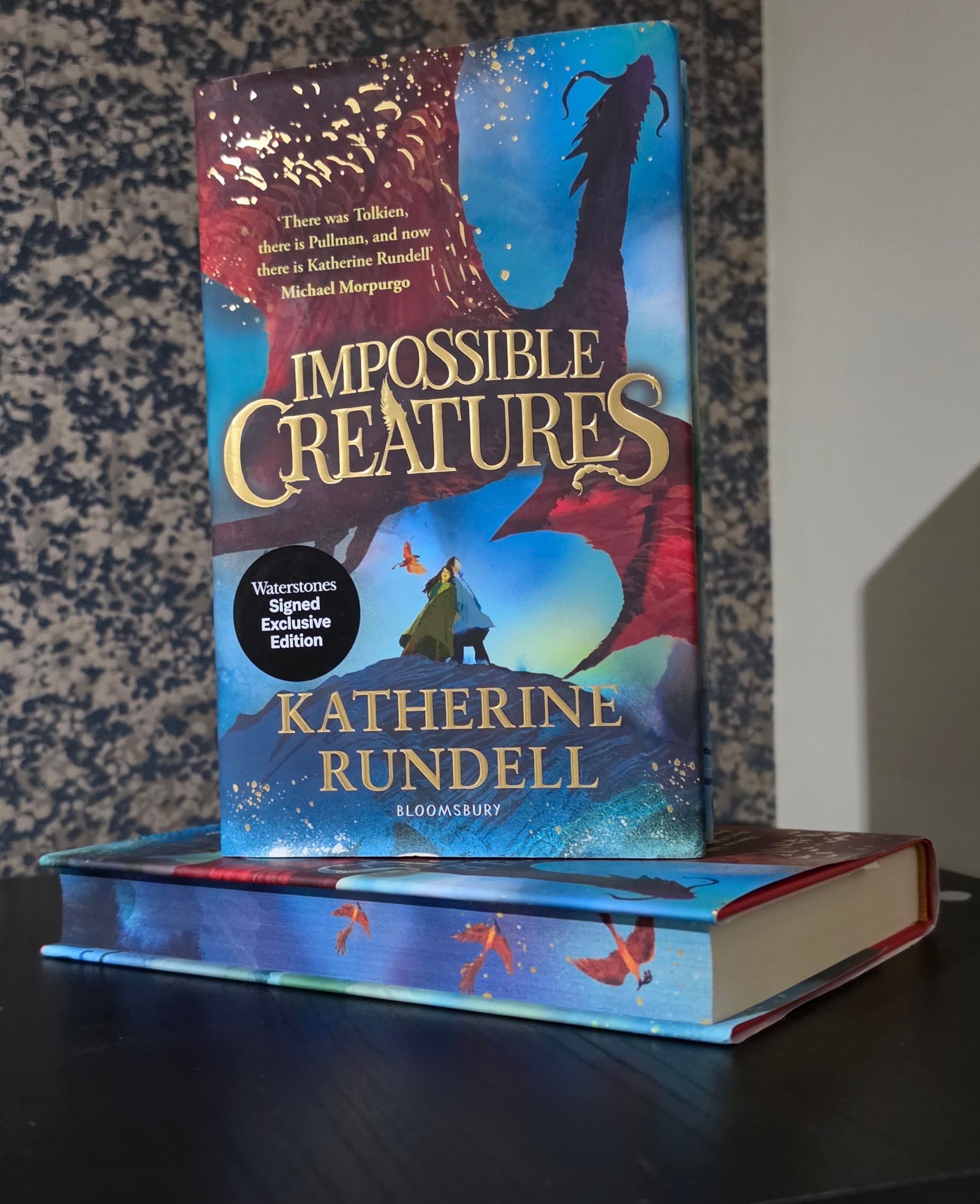 Retailer Signed Edition
The signed version of the first Waterstones exclusive, produced before the Book of the Year award. Hand-signed by Katherine Rundell, white top and bottom edges with the sprayed design on the foredge, custom endpapers, and a bonus Archipelago short story not in the trade edition. A black Waterstones Signed Exclusive Edition roundel sits low on the jacket rather than up in the sky.
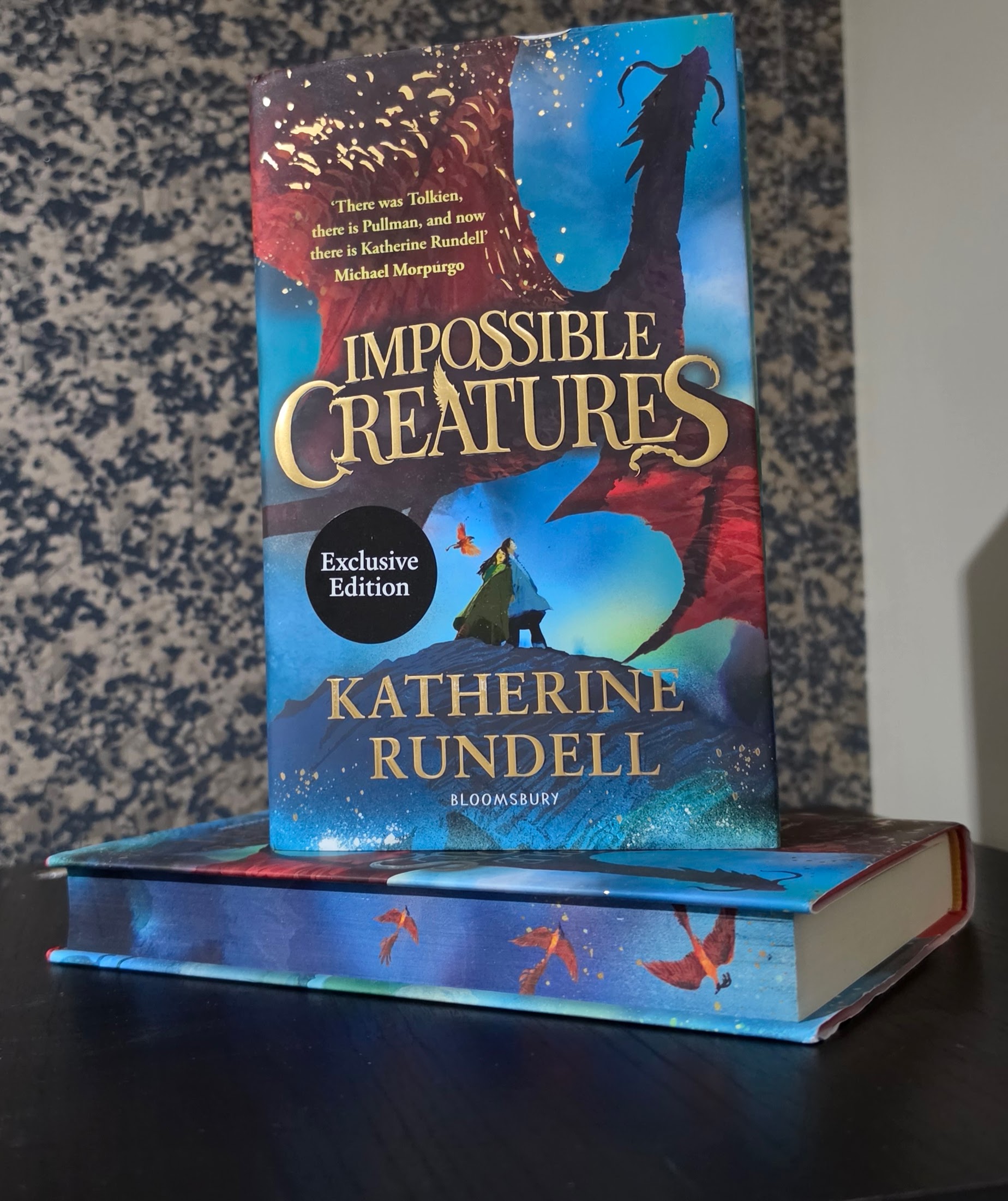 Retailer Exclusive
The same book as the signed exclusive above, issued without a signature. Produced before the award, so there is no banner on the jacket. White top and bottom edges, sprayed foredge, and a black Exclusive Edition roundel low on the front panel. Hand-signed copies of the exclusives circulate, so a signature by itself will not tell you which of the two exclusives you are holding.
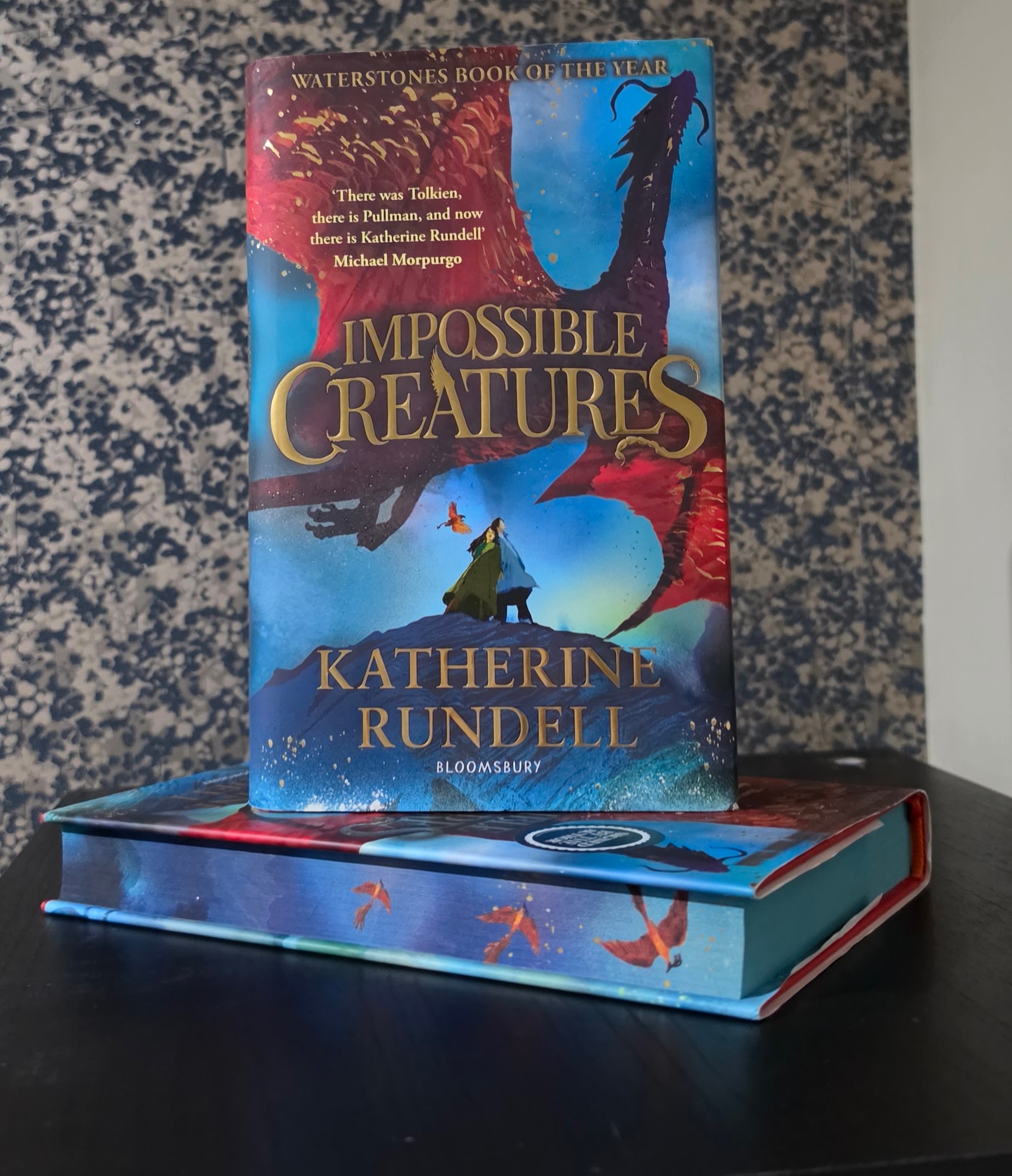 Retailer Exclusive
Made after the award, and a separate product rather than a reprint: its own ISBN, and therefore its own first printing. Two things identify it at a glance. Blue top and bottom edges where the first exclusive is white, and a gold WATERSTONES BOOK OF THE YEAR banner across the top of the jacket. This is the one that shelves as a matched set with the sprayed editions of The Poisoned King and The Neverfear.
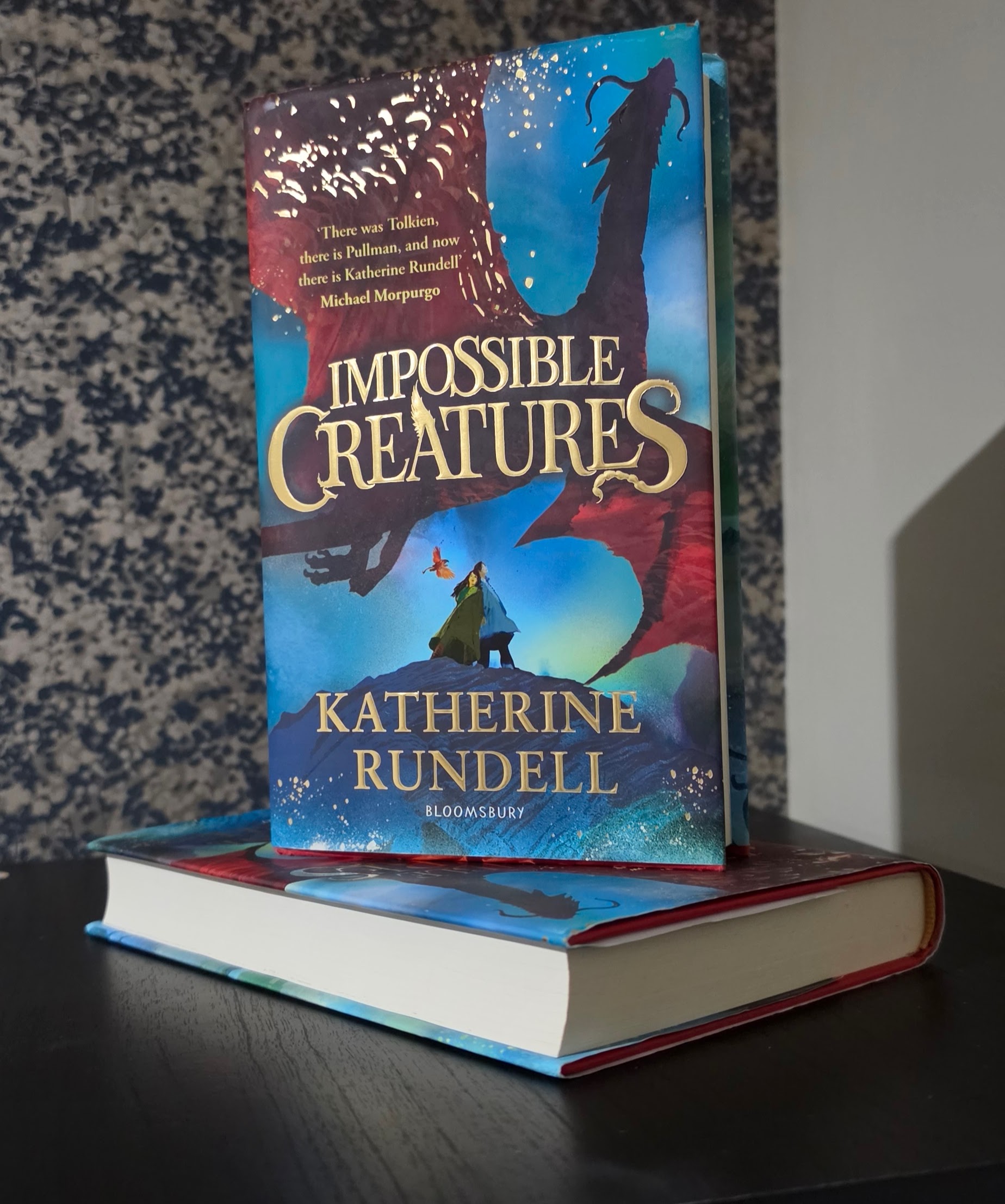 Standard First Edition
The trade hardback, 368 pages, sold everywhere rather than through any one retailer. Plain edges, no roundel. First printings are what collectors want here, so check the number line on the copyright page. Jackets printed after the award carry the Book of the Year banner, which on this ISBN does indicate a later printing.
US Editions
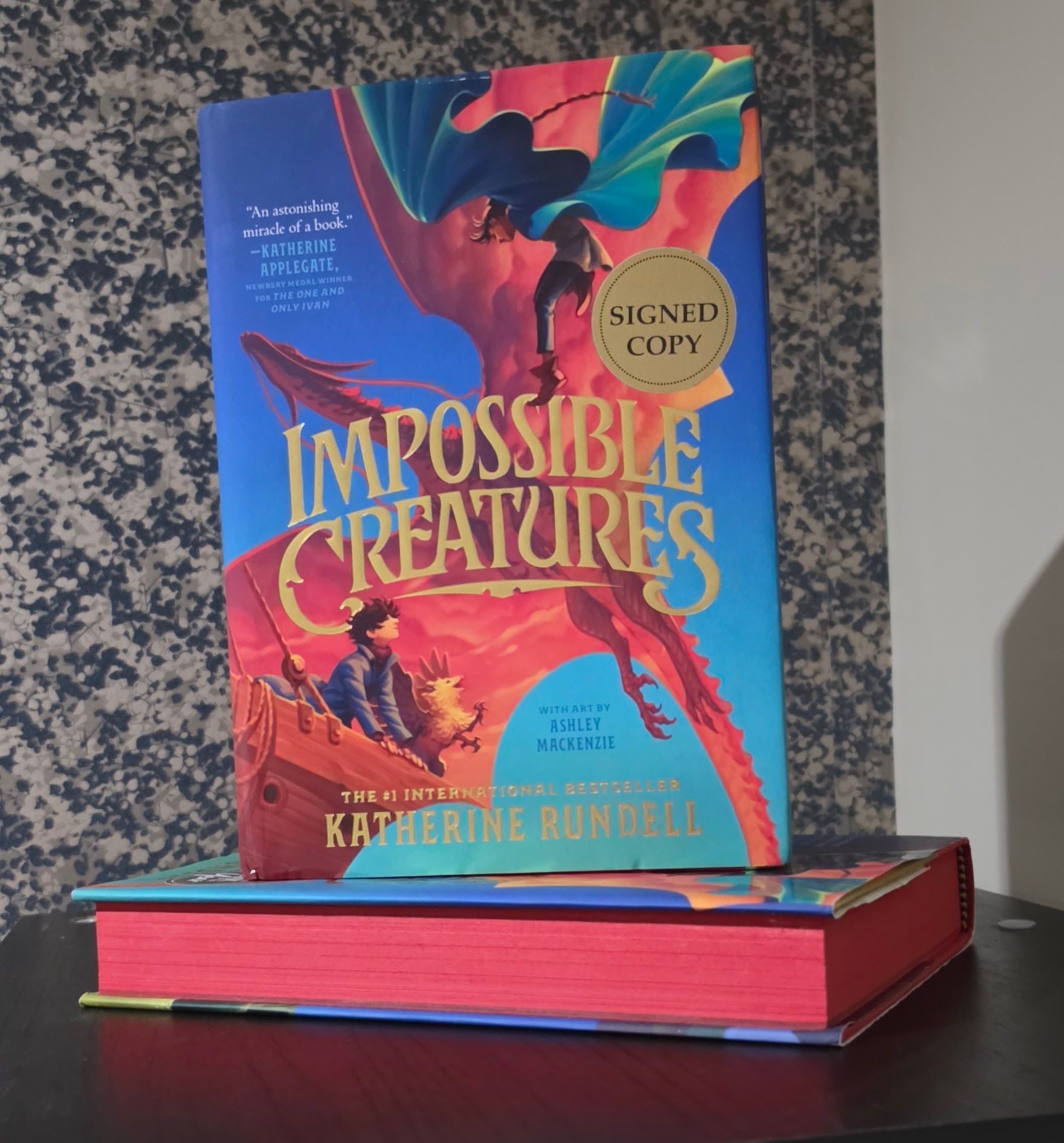 Signed Edition
The signed US edition, carrying a gold SIGNED COPY roundel on the jacket and its own ISBN separate from the standard printing. Red sprayed edges, and red boards with red foil beneath the jacket.
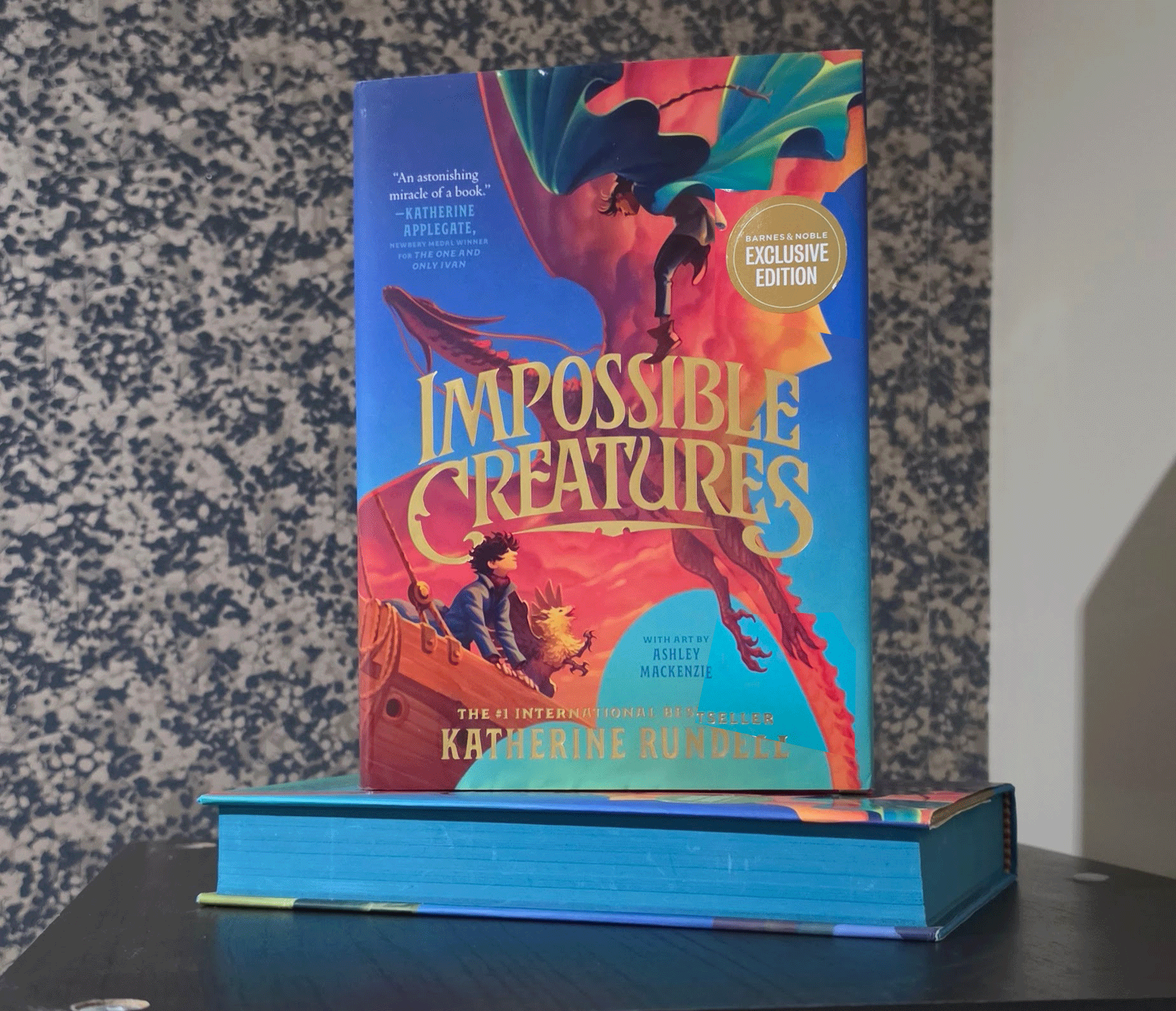 Retailer Exclusive
The US retailer exclusive, published 10 September 2024, 368 pages. Named 2024 Barnes and Noble Children's Book of the Year, and the jacket carries a gold Book of the Year roundel. Physically distinct from the other two US printings: blue sprayed edges, and blue boards with gold foil beneath the jacket, where the signed and standard editions are red with red foil. Sold only through Barnes and Noble.
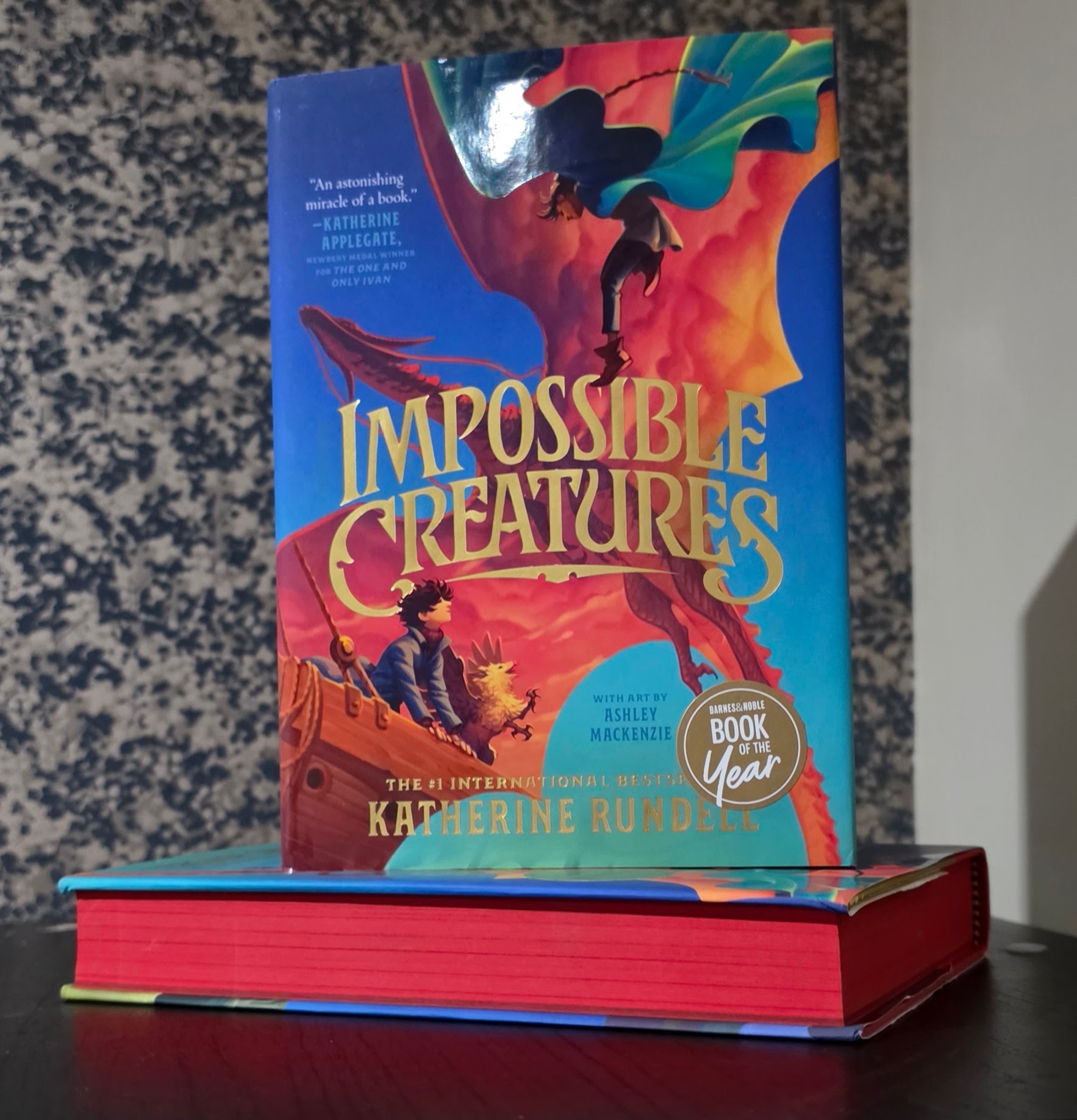 Standard First Edition
The US trade hardback, art by Ashley Mackenzie. Red sprayed edges, and red boards with red foil beneath the jacket. Copies also turn up with a Barnes and Noble Book of the Year roundel applied to standard stock, which is a sticker rather than the exclusive edition above.
- Any unsigned edition above can be signed in person at an event. It keeps the ISBN it was issued with.
- A hand-signed exclusive is not a separate edition. Nothing on the barcode distinguishes it.
- A publisher signed edition is issued signed under its own ISBN. Those are listed above.
- Event copies are often stamped as well as signed, usually to the title page or front endpaper, sometimes dated.
- Of the UK editions, only the indie ones have foil boards under the jacket. Every other UK edition has plain boards, so a jacketless copy can still be identified. The US printings all have coloured boards with foil, and the colour differs by edition.
Impossible Creatures · Paperback, 2024 and 2025
Impossible Creatures in paperback is a collecting field of its own. The UK paperback from Bloomsbury was issued as four Waterstones exclusive creature editions. The North American paperback from Yearling was issued as five: four sold in the US, and one, the Indigo Ratatoska, sold only in Canada. The Ratatoska is the rarest and most sought-after of all nine paperbacks, and the piece that completes the North American set. Each entry below explains how to confirm a true first edition, first printing.
★★★★½ Our review of Impossible Creatures Read it →UK Editions
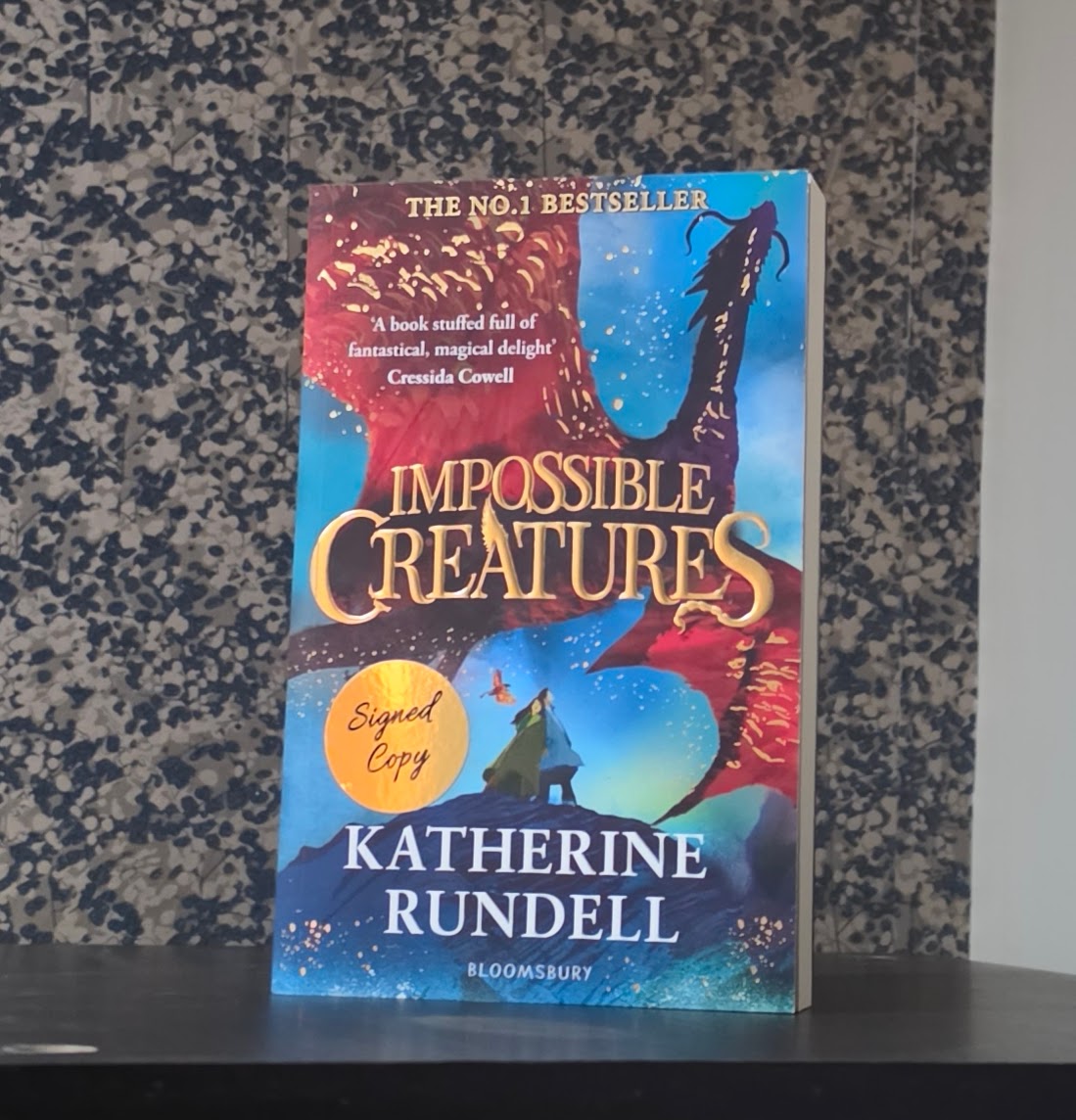 Standard First Edition Paperback
The standard UK paperback, carrying the same Daniel Egnéus cover art as the four Waterstones creature editions but none of their extras: no coloured band down the right-hand edge of the front cover and no creature section at the back. The barcode separates them fastest, 9781408897430 here against 9781526681638 on the creature copies. Cover price £8.99. A first printing has a number line ending in 1. A first printing carries the number line 2 4 6 8 10 9 7 5 3 1, no AI or TDM reservation in the rights paragraph, CPI Group (UK) Ltd as printer, and a line stating that this edition was published in 2024. Confirmed on a copy in hand, and identical to the four Waterstones creature copies.
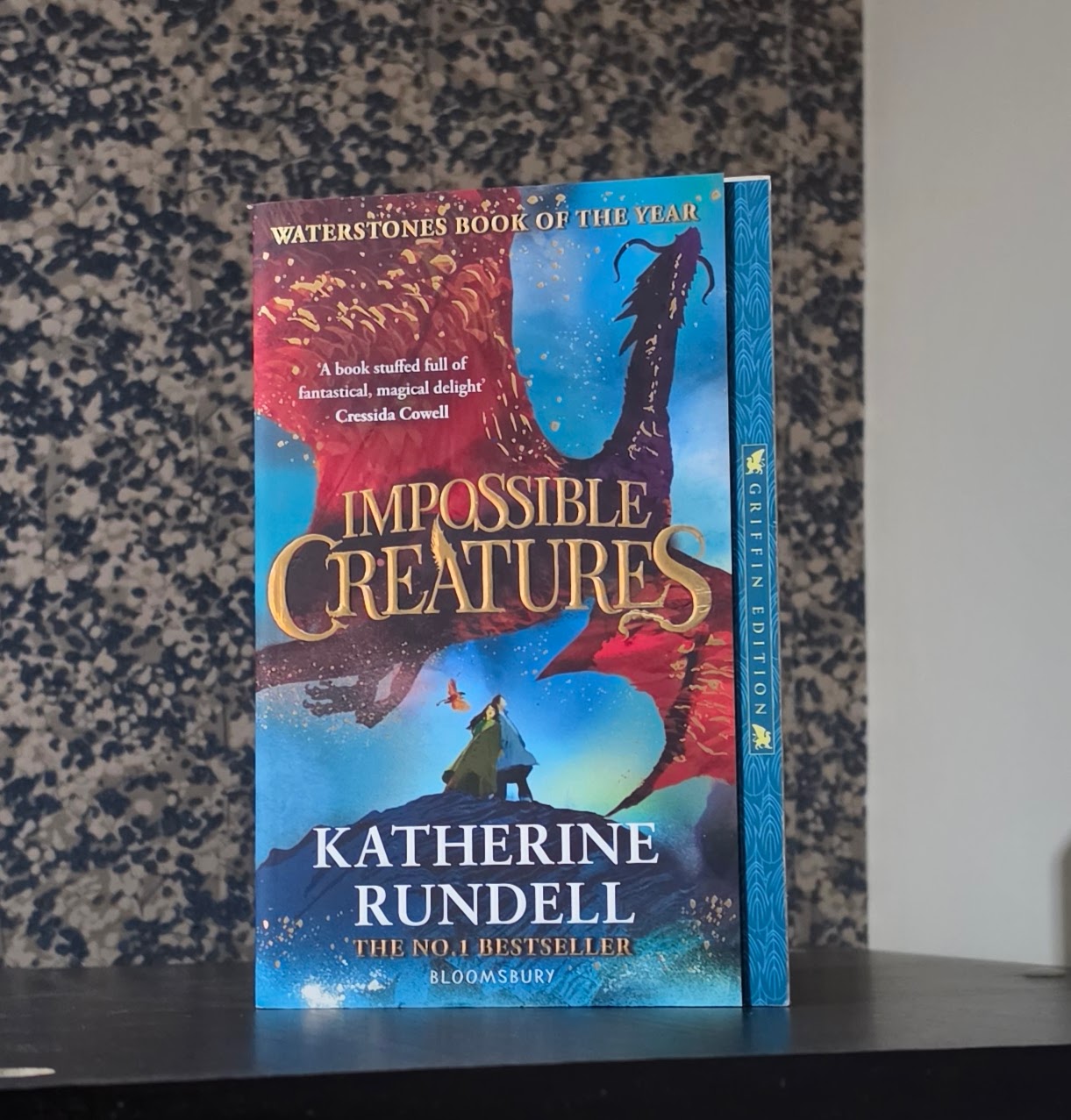 Retailer Exclusive Paperback
One of four Waterstones exclusive paperbacks. The front cover artwork is the same on all four and carries the Waterstones Book of the Year banner, so look at the right-hand edge of the front cover: this copy has a blue band reading GRIFFIN EDITION with a griffin emblem. Inside, it adds a creature section at the back written for this edition. All four share the ISBN of the standard paperback, so the number alone cannot identify a creature copy, and the creature was assigned at random at purchase. Includes The Centaur’s Spectacles, first published in the Waterstones exclusive hardback. A first printing has a number line ending in 1. A first printing carries the number line 2 4 6 8 10 9 7 5 3 1, no AI or TDM reservation in the rights paragraph, CPI Group (UK) Ltd as printer, and a line stating that this edition was published in 2024. Confirmed on a copy of this creature in hand.
 Retailer Exclusive Paperback
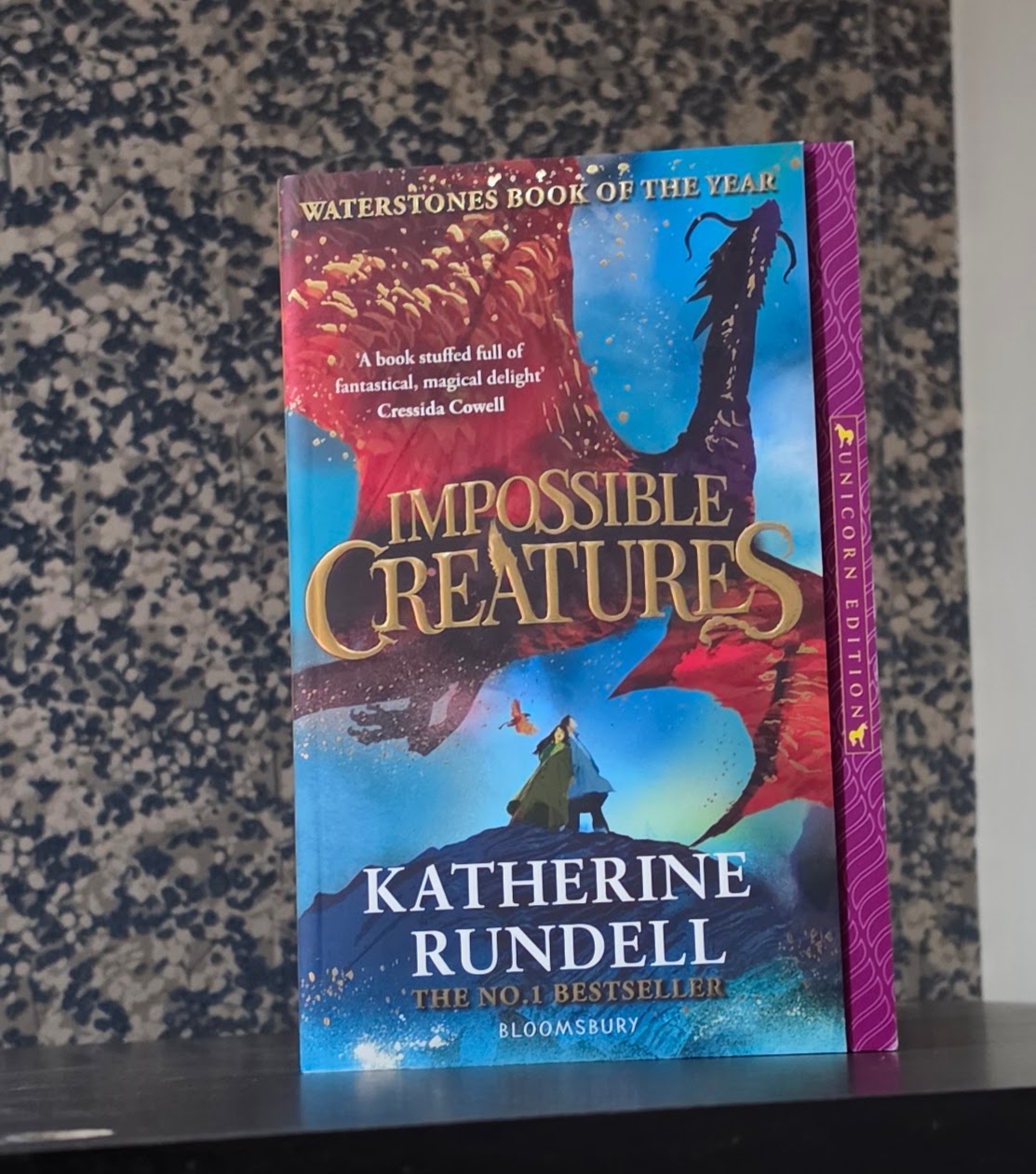
The Unicorn copy of the four Waterstones creature paperbacks, identified by the purple band down the right-hand edge of the front cover reading UNICORN EDITION. It adds a unicorn section at the back, plus The Centaur’s Spectacles. The ISBN matches the standard paperback and copies were sent out at random, so collectors building the set often bought blind or traded. A first printing has a number line ending in 1. A first printing carries the number line 2 4 6 8 10 9 7 5 3 1, no AI or TDM reservation in the rights paragraph, CPI Group (UK) Ltd as printer, and a line stating that this edition was published in 2024. Confirmed on a copy of this creature in hand.
 Retailer Exclusive Paperback
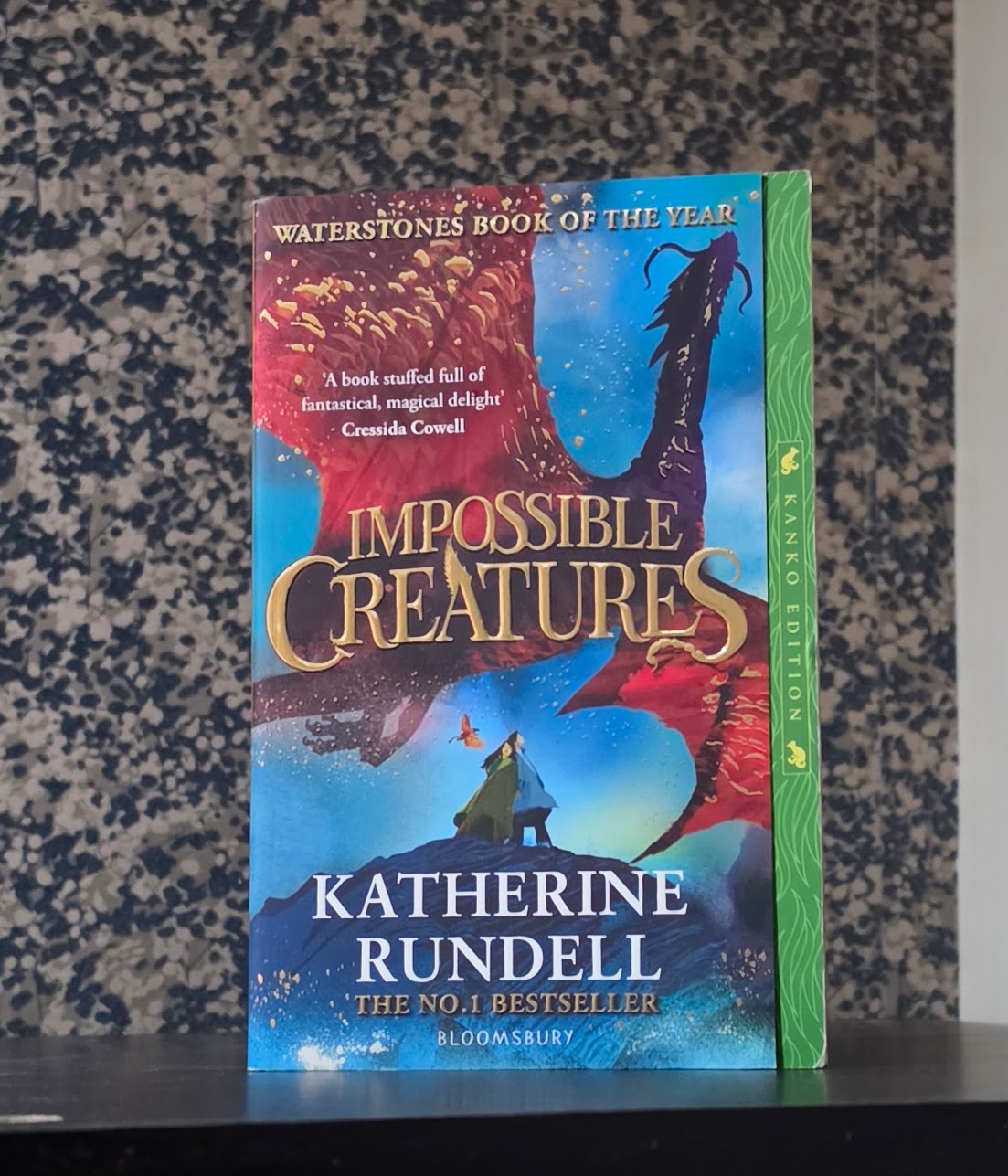
The Kanko copy, with a green band down the right-hand edge of the front cover reading KANKO EDITION and a kanko section at the back, plus The Centaur’s Spectacles. It carries the same ISBN as the standard paperback, so a listing that quotes only the number cannot tell you what you are buying. Always ask to see the Always ask to see the front cover band and the creature section. On the copy examined for this guide, a first printing carries the number line 2 4 6 8 10 9 7 5 3 1, which ends in 1, no AI or TDM reservation in the rights paragraph, CPI Group (UK) Ltd as printer, and a line stating that this edition was published in 2024.
 Retailer Exclusive Paperback
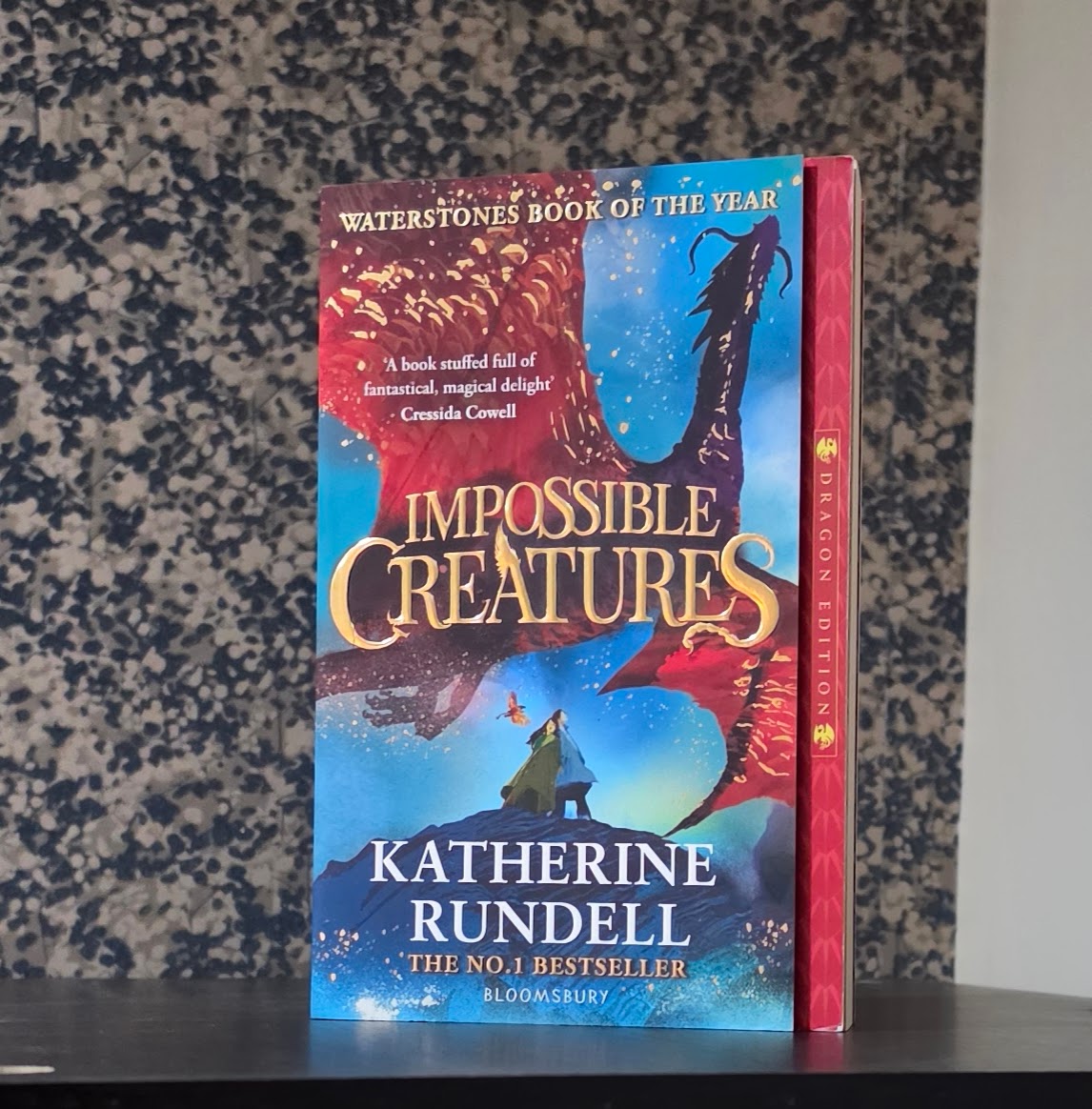
The Dragon copy, completing the four Waterstones creature paperbacks, with a red band down the right-hand edge of the front cover reading DRAGON EDITION and a dragon section at the back, plus The Centaur’s Spectacles. Because the creature was assigned at random under a shared ISBN, a matched set of all four in first printing is harder to assemble than any single copy suggests. Not to be confused with the Barnes and Noble Dragon Edition paperback in the US, a separate book with its own ISBN. A first printing has a number line ending in 1. A first printing carries the number line 2 4 6 8 10 9 7 5 3 1, no AI or TDM reservation in the rights paragraph, CPI Group (UK) Ltd as printer, and a line stating that this edition was published in 2024. Confirmed on a copy of this creature in hand.
North American Editions
 Standard First Edition Paperback
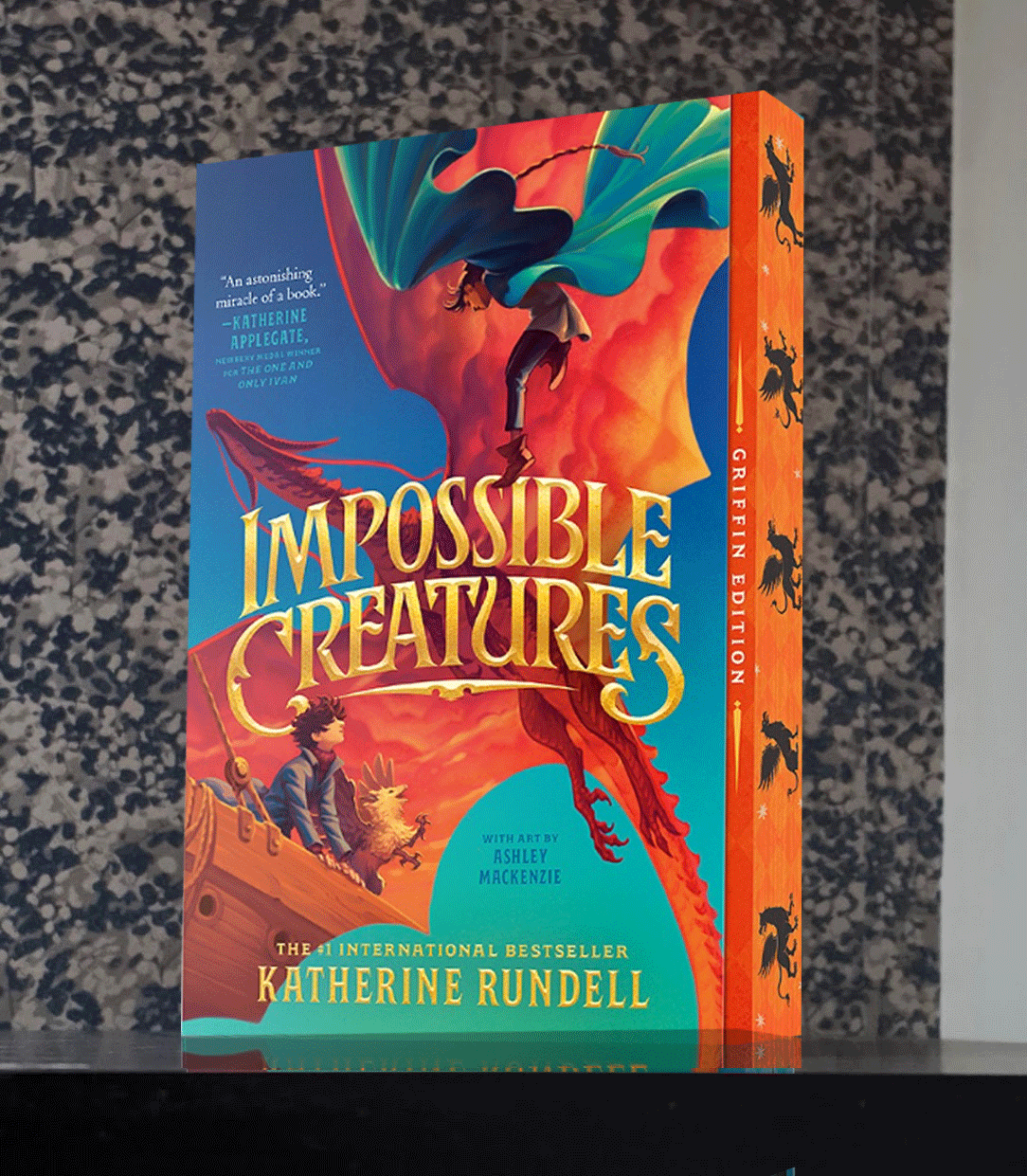
The North American trade paperback, published on 26 August 2025 by Yearling, an imprint of Random House Children’s Books, with a first printing of 500,000 copies across the paperback release. Stenciled griffin edges and a bonus short story about a pair of magical spectacles from the Archipelago. Sold everywhere, but still one of the five creature paperbacks needed for the full North American set. Not to be confused with the UK Waterstones Griffin Edition, a separate Bloomsbury paperback. A first printing carries the number line 10 9 8 7 6 5 4 3 2 1, with Yearling as the imprint, manufactured in China, and an AI and text and data mining reservation that appears on first printings here and is therefore no guide to the printing. The copyright page lists the paperback ISBN as 9780593809891 on every variant, so only the barcode and the edge art identify which one you hold. Confirmed on the Walmart Unicorn copy examined for this guide.
 Retailer Exclusive Paperback
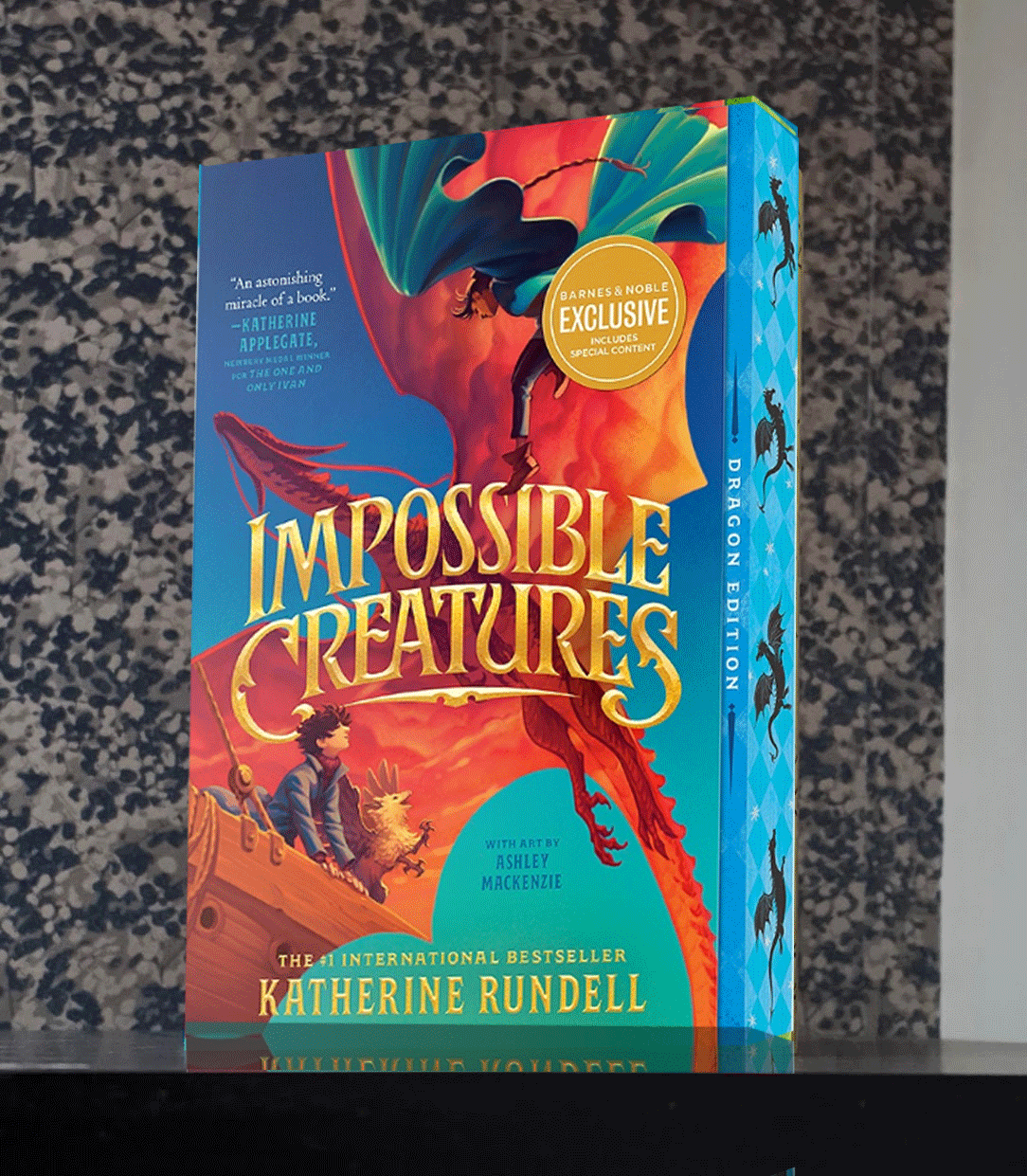
The Barnes and Noble paperback exclusive, with a unique cover insert, printed dragon edge design, an exclusive Q&A with Katherine Rundell, and a preview of a new Guardian’s Bestiary entry from The Poisoned King, plus the bonus spectacles story. The Barnes and Noble, Target and Walmart paperbacks carry consecutive ISBNs, so read the final digits of the barcode carefully. Not to be confused with the UK Waterstones Dragon Edition or the blue-edged Barnes and Noble exclusive hardback. A first printing carries the number line 10 9 8 7 6 5 4 3 2 1, with Yearling as the imprint, manufactured in China, and an AI and text and data mining reservation that appears on first printings here and is therefore no guide to the printing. The copyright page lists the paperback ISBN as 9780593809891 on every variant, so only the barcode and the edge art identify which one you hold. Confirmed on the Walmart Unicorn copy examined for this guide.
 Retailer Exclusive Paperback
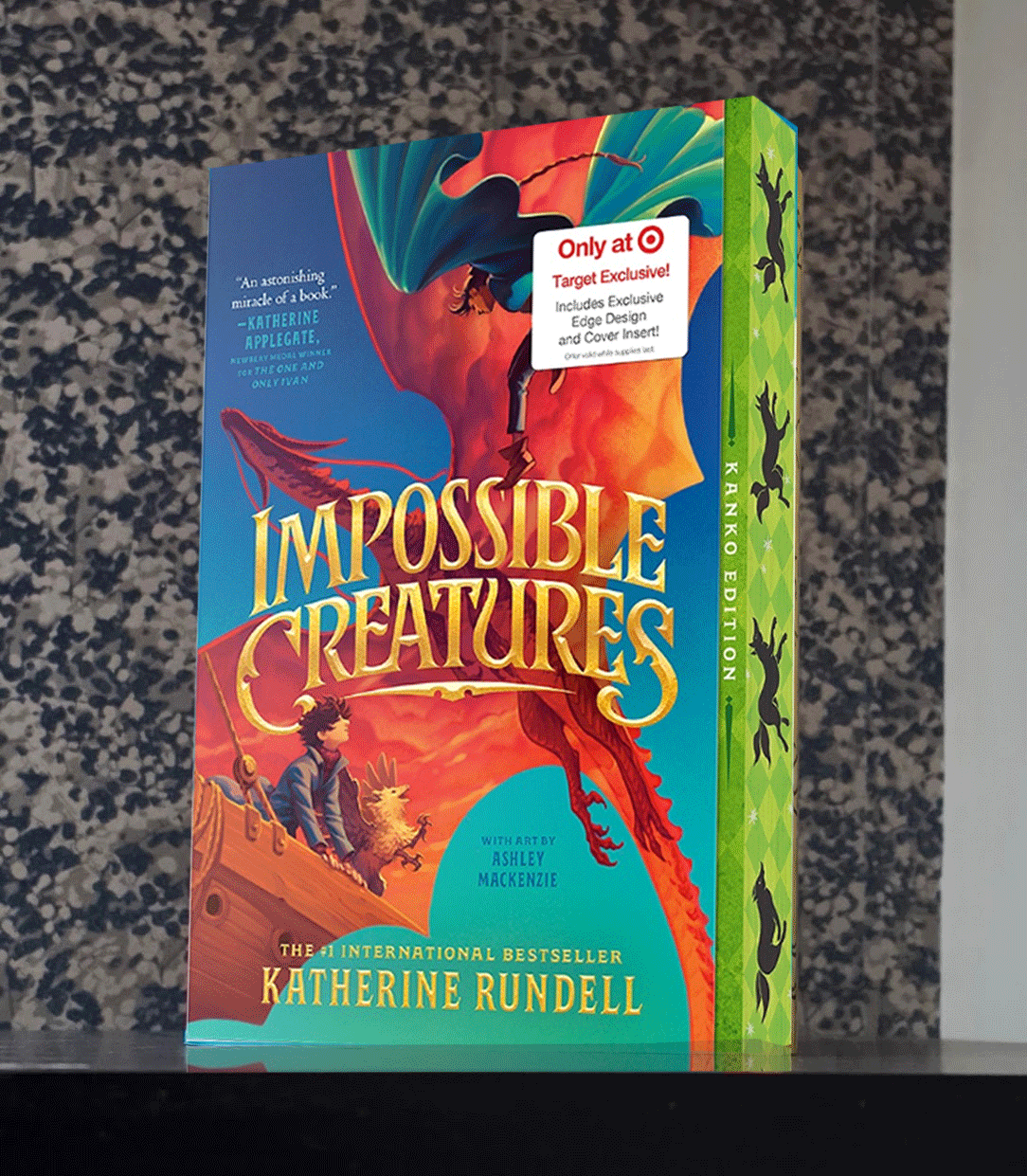
Sold only at Target, with an exclusive stencil edge design showing the kanko and the bonus spectacles story. Its ISBN sits between the Barnes and Noble and Walmart exclusives and differs only in the final digits, so check the barcode as well as the edges. A first printing carries the number line 10 9 8 7 6 5 4 3 2 1, with Yearling as the imprint, manufactured in China, and an AI and text and data mining reservation that appears on first printings here and is therefore no guide to the printing. The copyright page lists the paperback ISBN as 9780593809891 on every variant, so only the barcode and the edge art identify which one you hold. Confirmed on the Walmart Unicorn copy examined for this guide.
 Retailer Exclusive Paperback
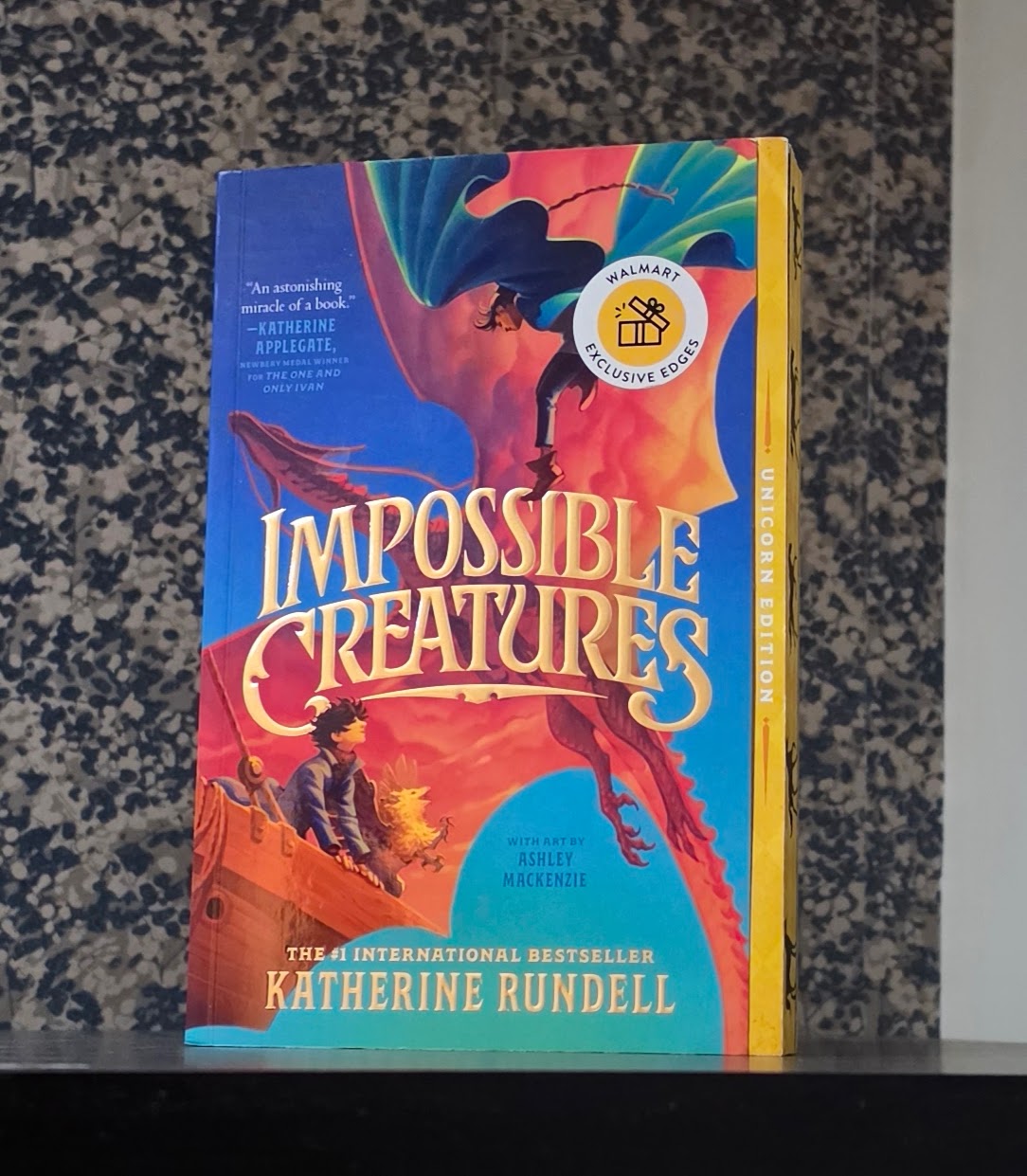
The Walmart exclusive paperback, with unicorn edges and the bonus spectacles story. It is the last of three consecutive retailer ISBNs shared with the Barnes and Noble and Target editions, so identify it by barcode as well as by creature. A first printing carries the number line 10 9 8 7 6 5 4 3 2 1, with Yearling as the imprint, manufactured in China, and an AI and text and data mining reservation that appears on first printings here and is therefore no guide to the printing. The copyright page lists the paperback ISBN as 9780593809891 on every variant, so only the barcode and the edge art identify which one you hold. Confirmed on the Walmart Unicorn copy examined for this guide.
 Canada Only Exclusive Paperback
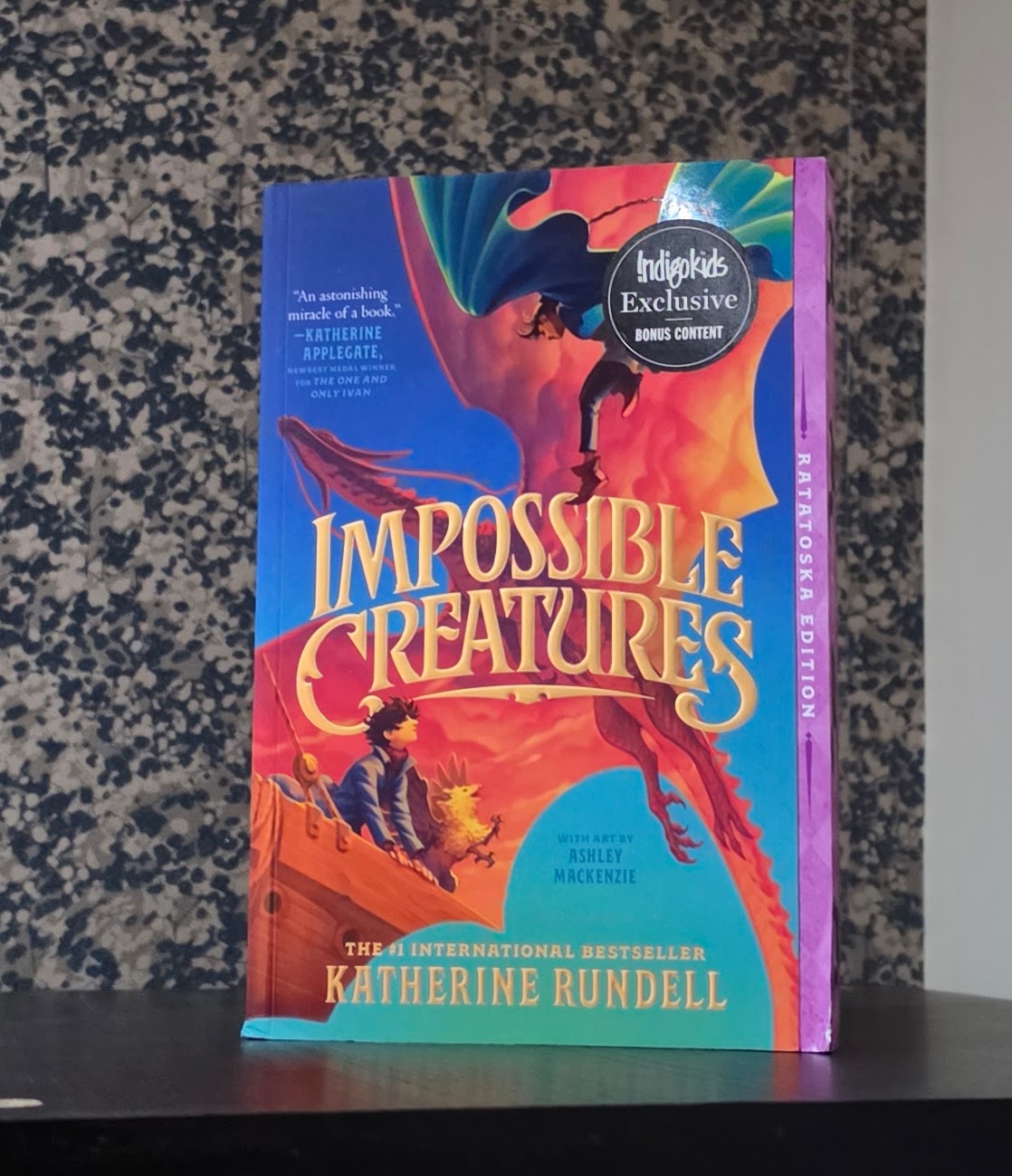
The rarest and most sought-after of the five North American creature paperbacks. The Griffin, Dragon, Kanko and Unicorn editions were all sold at US retail, but the Ratatoska was sold only through Indigo in Canada, making it the hardest piece for American collectors completing the five-book set and the copy that decides whether a set is complete. Unique cover insert, printed ratatoska edges and the bonus spectacles story. Highly collectible in its own right. A first printing carries the number line 1 2 3 4 5 29 28 27 26 25, the 1 being the printing and the 25 the year, with Puffin Canada of the Tundra Book Group as imprint, printed in China, and an AI and text and data mining reservation in the rights paragraph. That reservation sits on the first printing here, so unlike the UK copies it tells you nothing about which printing you hold. Confirmed in hand.
- Any unsigned edition above can be signed in person at an event. It keeps the ISBN it was issued with.
- A hand-signed exclusive is not a separate edition. Nothing on the barcode distinguishes it.
- A publisher signed edition is issued signed under its own ISBN. Those are listed above.
- Event copies are often stamped as well as signed, usually to the title page or front endpaper, sometimes dated.
- Rundell has signed extensively at UK events, and at US bookshop and Barnes and Noble tour stops. No Canadian signing event for the series has come to light, so a signed Indigo Ratatoska is worth asking about provenance before paying a premium. A signature never creates a separate edition: a signed paperback keeps the ISBN it was issued with.
The Poisoned King · 2025
Book Two settled into the pattern the series has followed since: a standard hardback, a Waterstones signed exclusive, an unsigned Waterstones exclusive with the same edge treatment, and a signed foil edition through independent bookshops.
★★★★★ Our review of The Poisoned King Read it →UK Editions
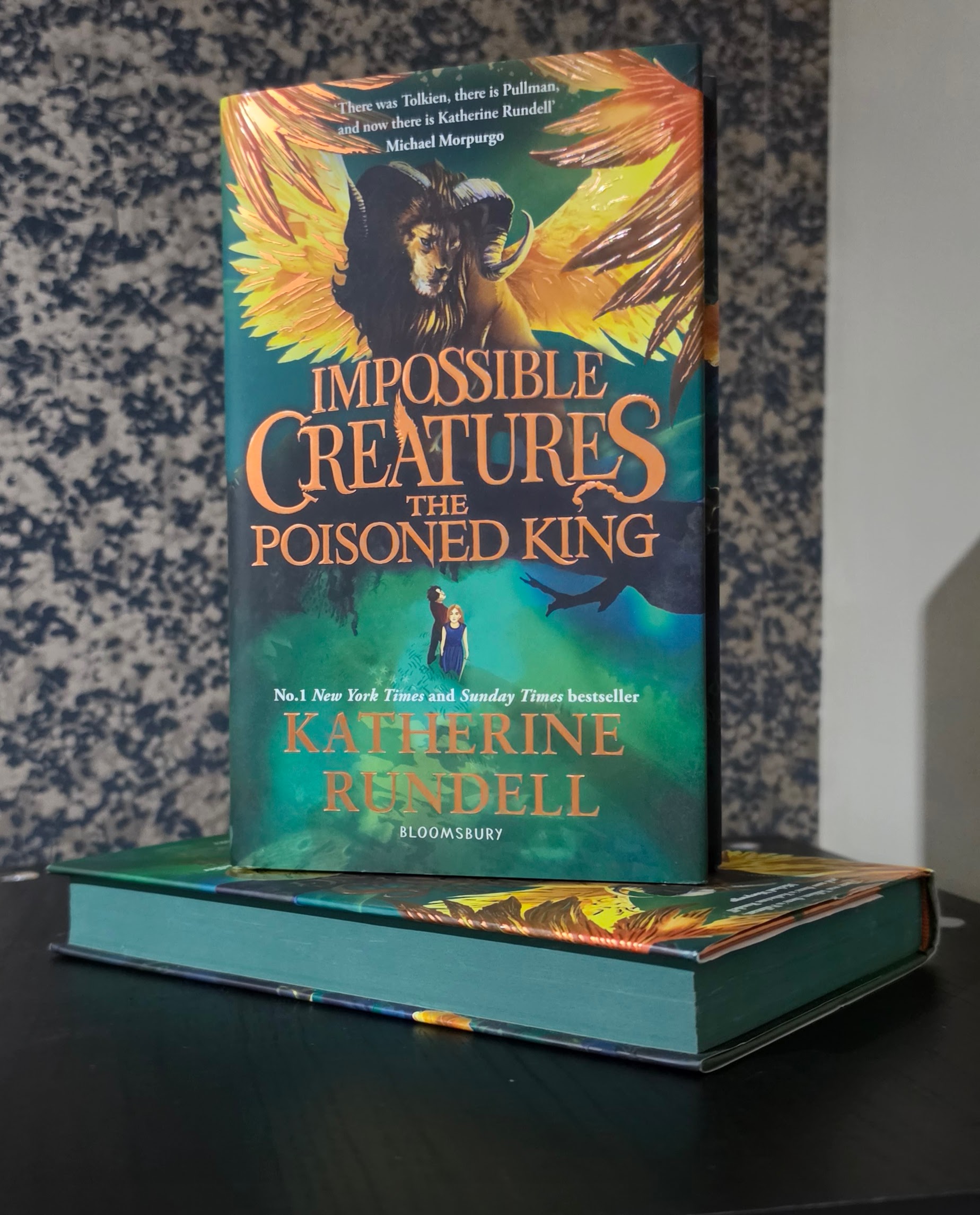
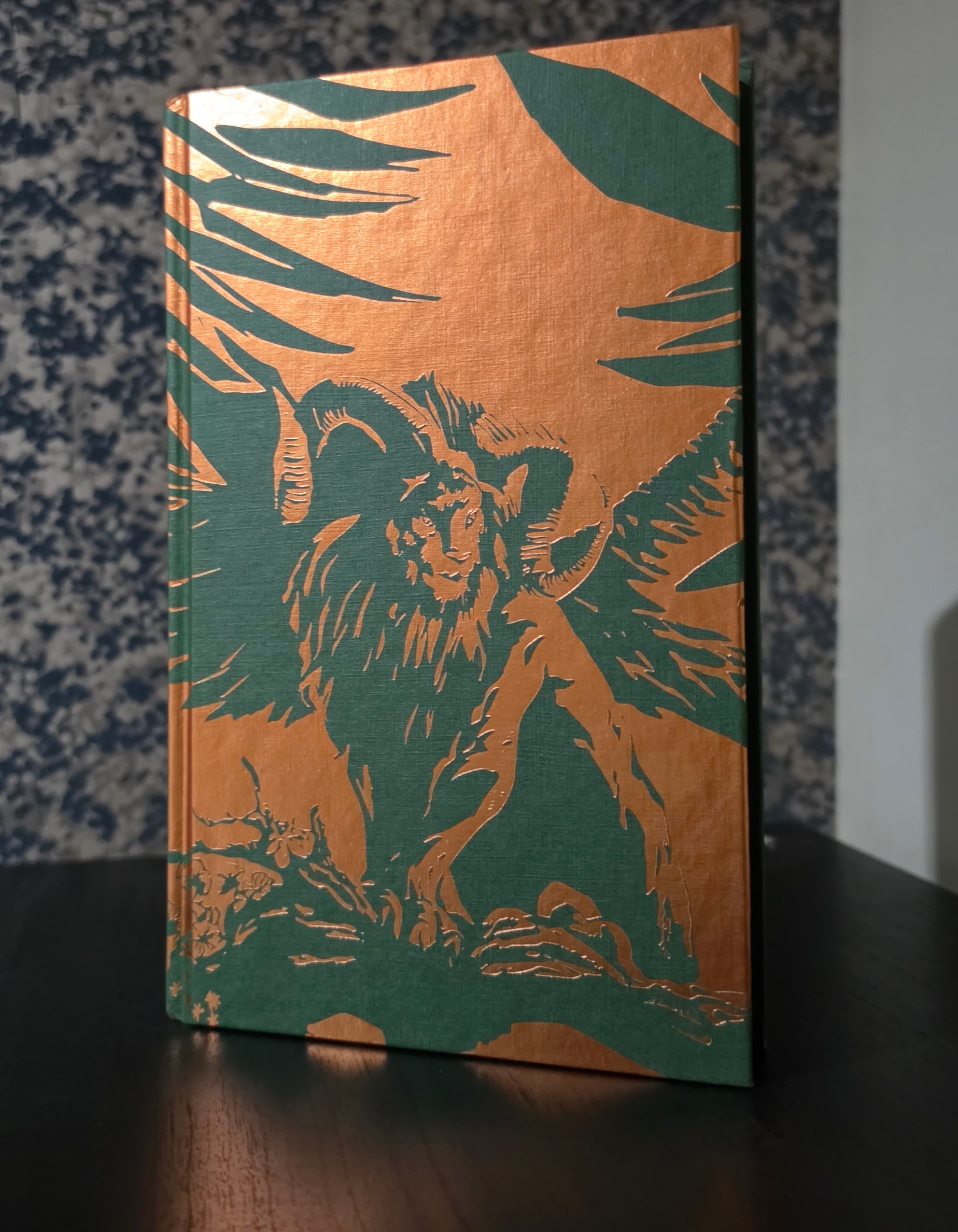
Hand-signed and sold only through independent bookshops. The book carries the standard trade ISBN, and the S you may see appended on a shop website is a listing convention rather than anything printed on the copy. Photographs of the signature are the only proof a listing can offer.
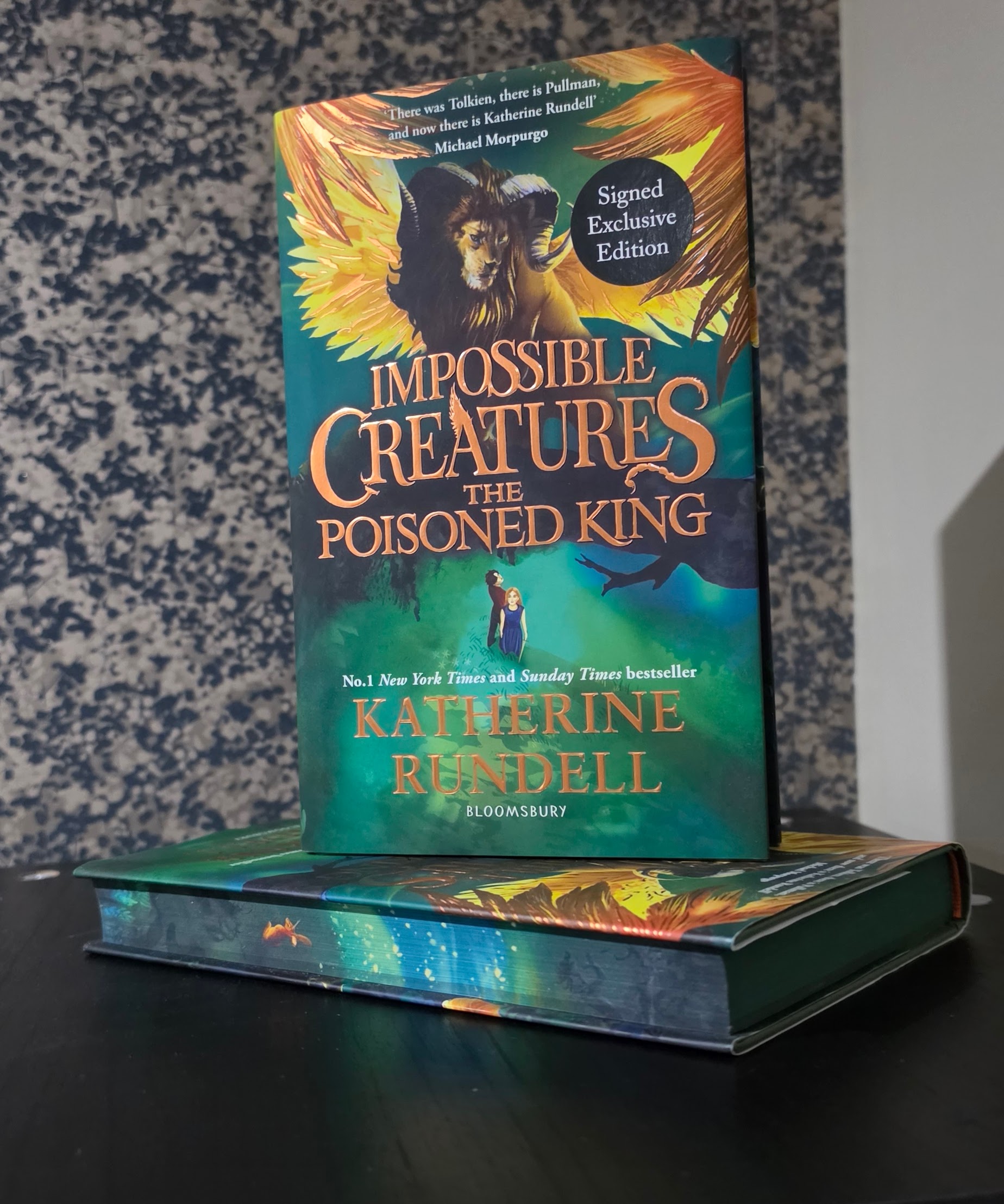 Retailer Signed Edition
Hand-signed by Katherine Rundell with the exclusive sprayed edge design, under its own ISBN. Long gone at retail and the scarcer of the two Waterstones versions of Book Two.
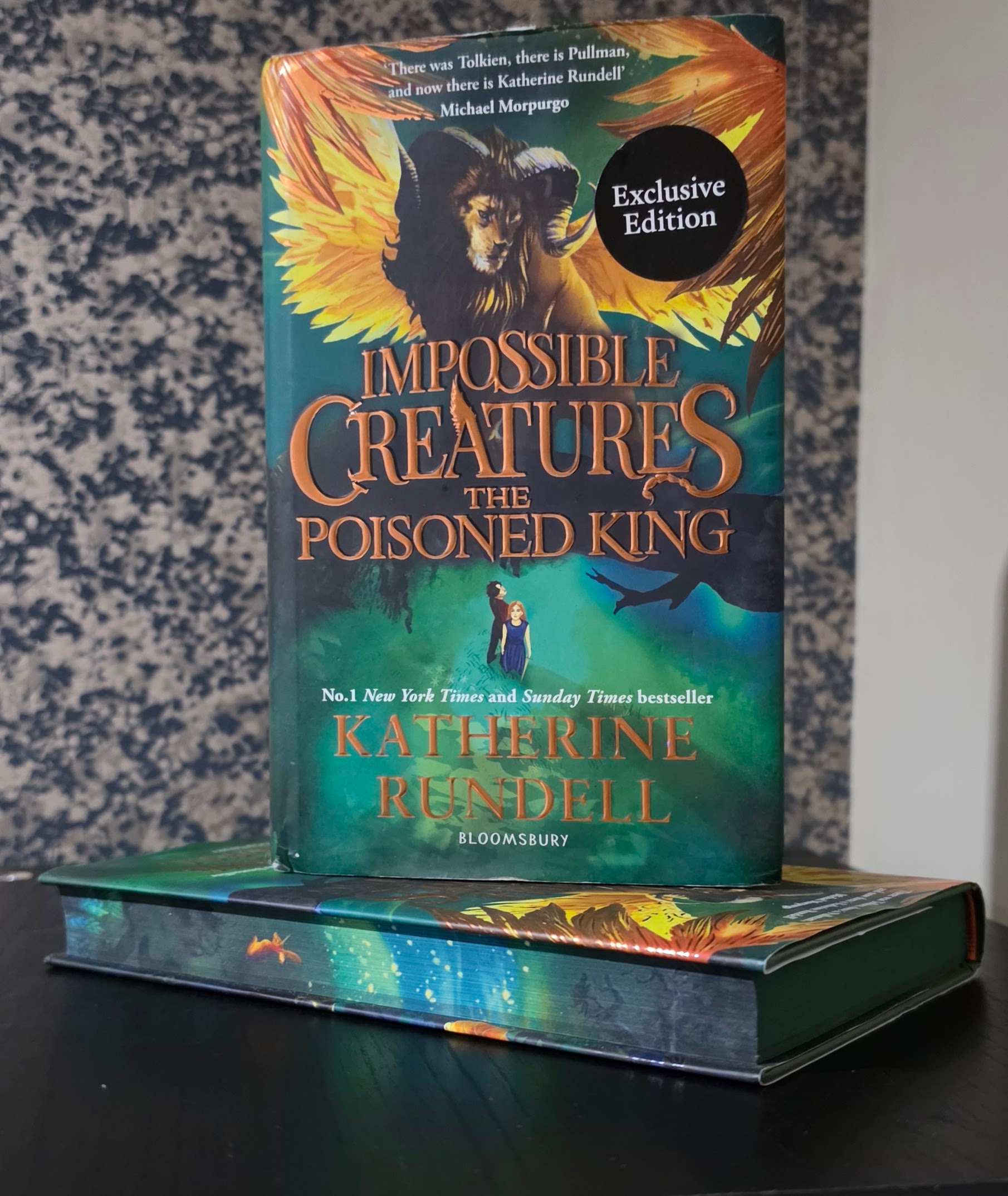 Retailer Exclusive
The same edge treatment without the signature, under its own ISBN. Sellers routinely describe this as the signed edition, so match the barcode against the number above before paying a signed premium.
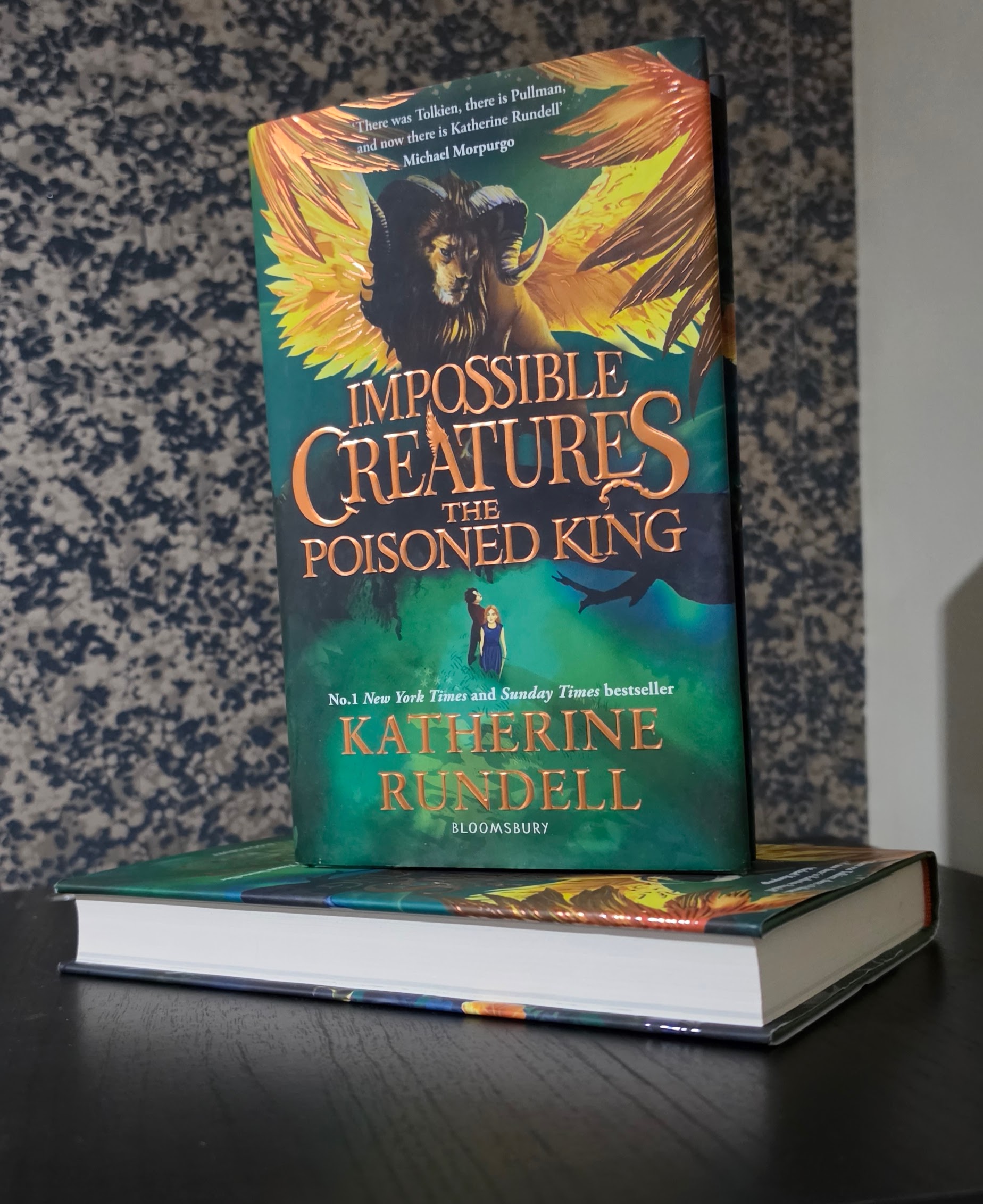 Standard First Edition
The trade hardback, 336 pages, sold everywhere rather than through any one retailer. Plain edges, no roundel. Check the number line on the copyright page for a first printing.
US Editions
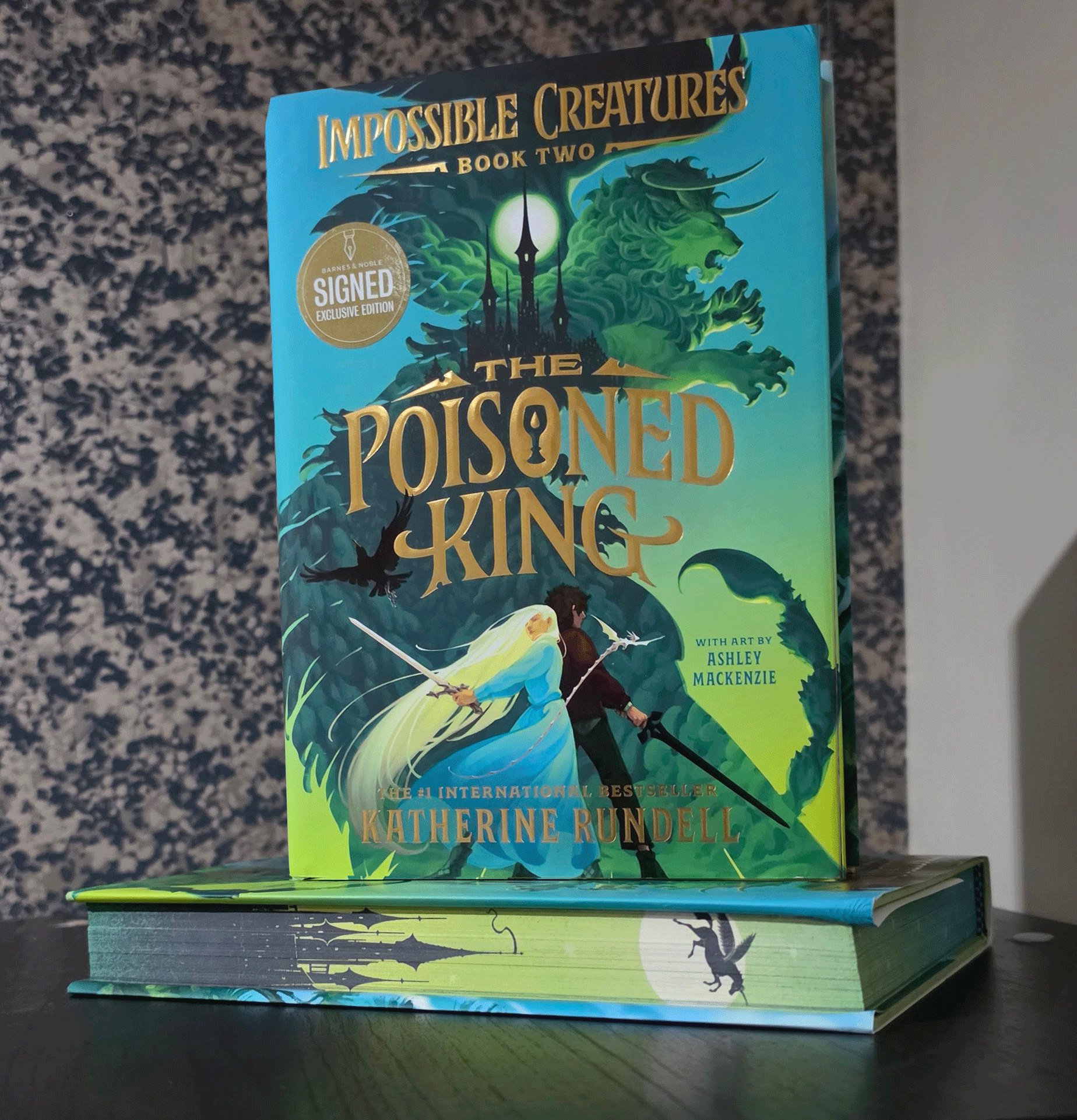 Signed Retailer Exclusive
Published 28 November 2025, limited to one per customer and now out of stock online. The scarcest of the US editions of Book Two, and the only signed US printing.
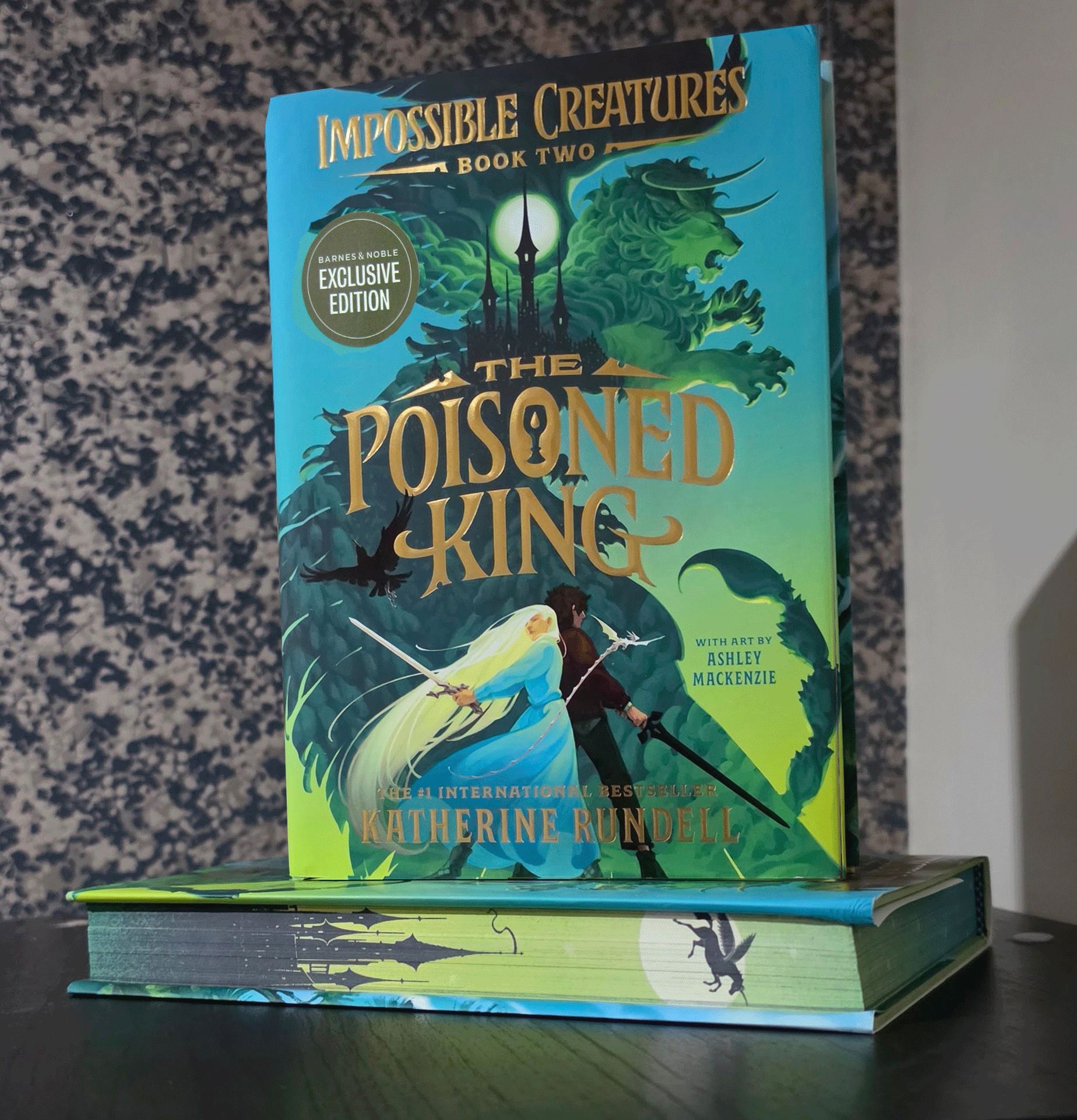 Retailer Exclusive
The unsigned Barnes and Noble exclusive, published 11 September 2025. Same publication day as the trade hardback, under its own ISBN.
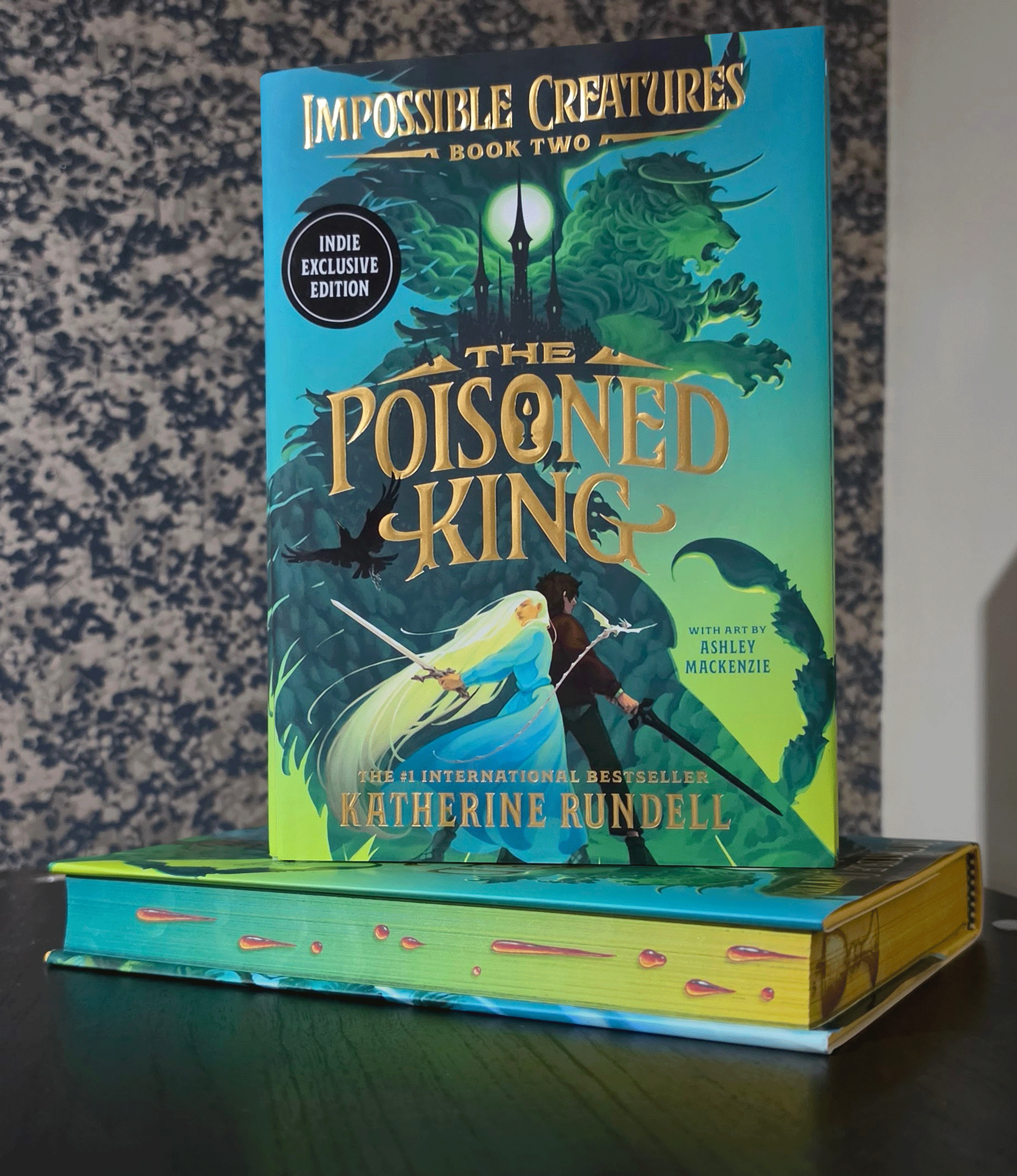 Independent Bookshops
A sprayed edge edition sold through American independent bookshops, issued under the standard hardback ISBN. Physically a different book from the trade edition, but nothing on the barcode says so, which is the same trap as the signed indie editions in the UK. Photographs of the edges are the only way to tell them apart in a listing.
The US trade hardback, published 11 September 2025, 304 pages, art by Ashley Mackenzie.
- Any unsigned edition above can be signed in person at an event. It keeps the ISBN it was issued with.
- A hand-signed exclusive is not a separate edition. Nothing on the barcode distinguishes it.
- A publisher signed edition is issued signed under its own ISBN. Those are listed above.
- Event copies are often stamped as well as signed, usually to the title page or front endpaper, sometimes dated.
- Of the UK editions, only the indie ones have foil boards under the jacket. Every other UK edition has plain boards, so a jacketless copy can still be identified. The US printings all have coloured boards with foil, and the colour differs by edition.
The Neverfear · 2026
Published 27th August 2026. The Waterstones signed edition sold out online within two days and has since returned to shop ordering, so check before assuming either way. UK editions first, then the North American ones: Knopf, Barnes and Noble, and the Canada only Indigo exclusive.
★★★★★ Our review of The Neverfear Read it →UK Editions
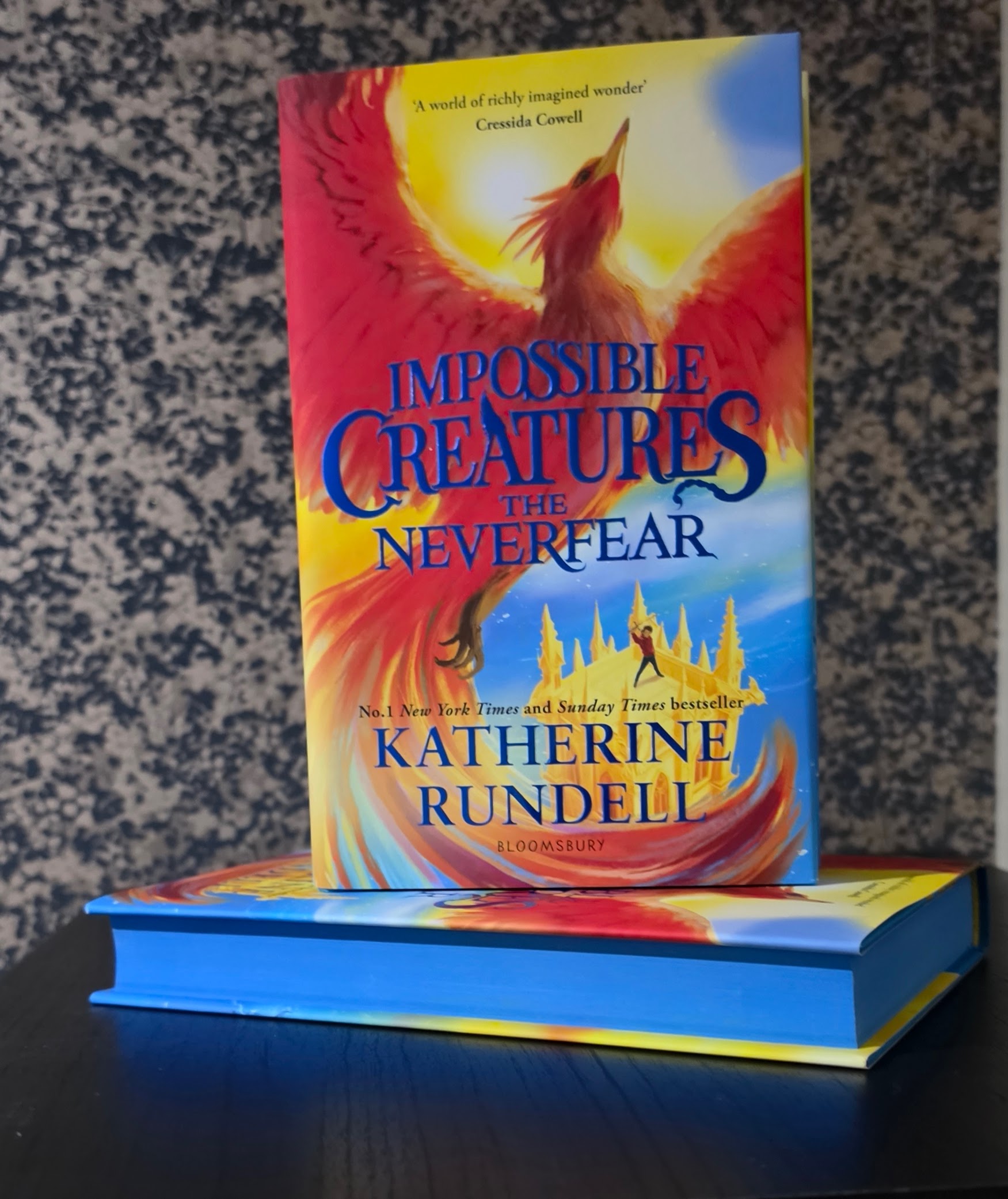
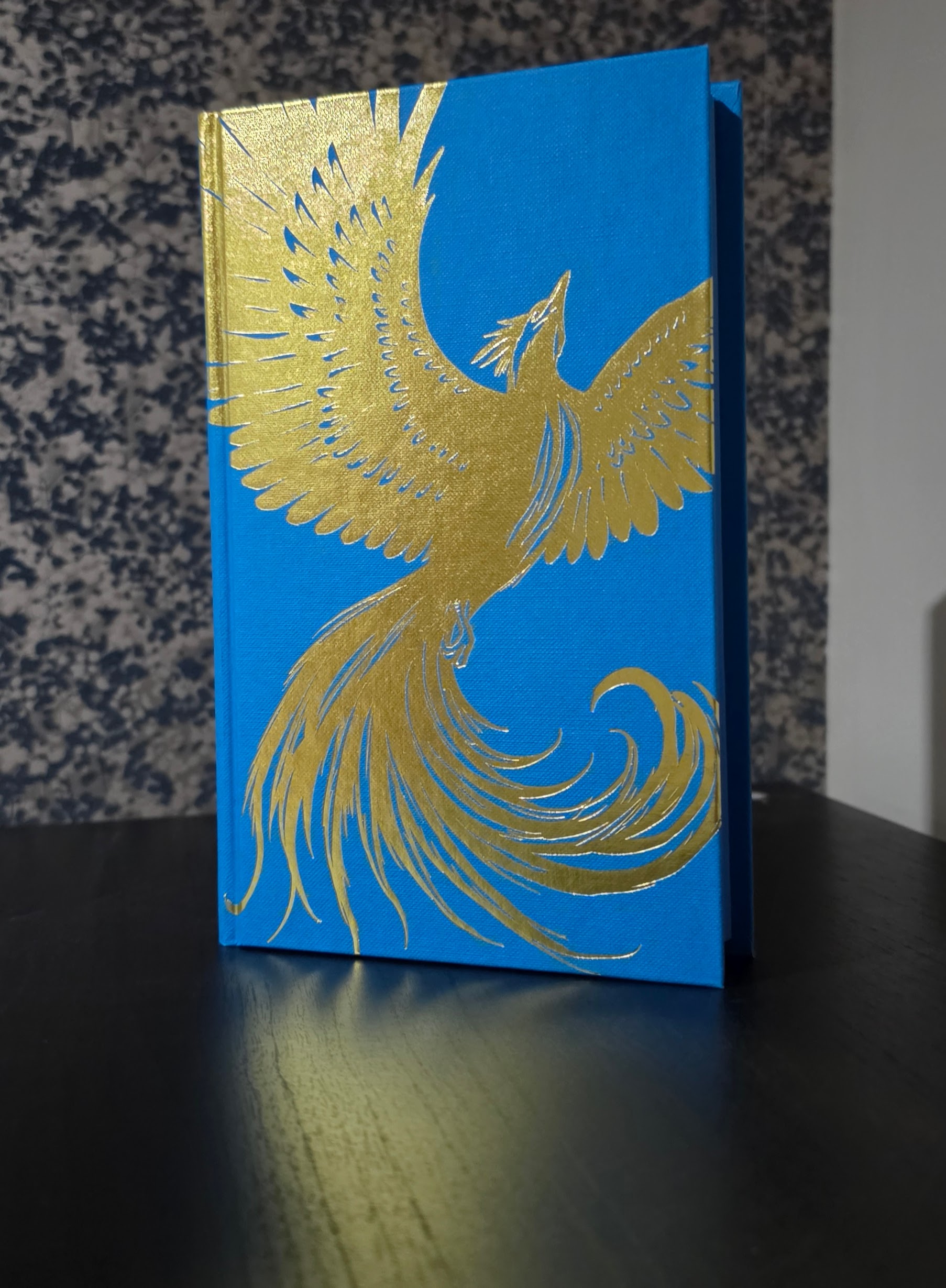
Hand-signed with sprayed edges and foil, sold through independent bookshops. The edge design differs from the Waterstones one. It carries the standard trade ISBN, with any S suffix existing only in a shop's own listing, so the number cannot verify it. Availability varies shop by shop.
 Retailer Signed Edition
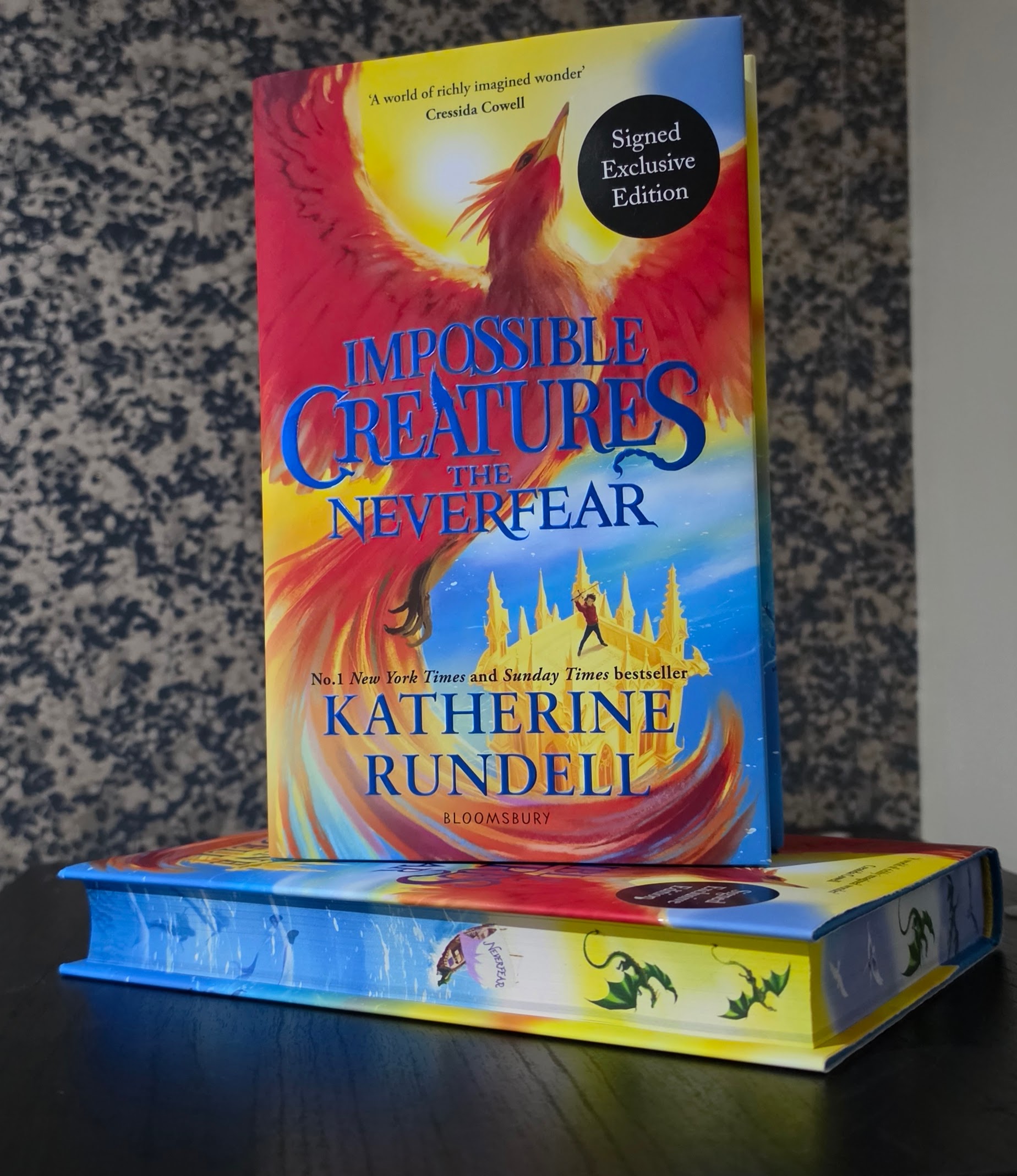
Hand-signed by Katherine Rundell, with the same exclusive sprayed edge as the unsigned exclusive. It sold out online within two days of publication, and stock has since reappeared for ordering through Waterstones shops, so availability is worth checking rather than assuming. Copies are already being listed above cover price, so check the barcode before paying a premium for anything described as signed.
 Retailer Exclusive
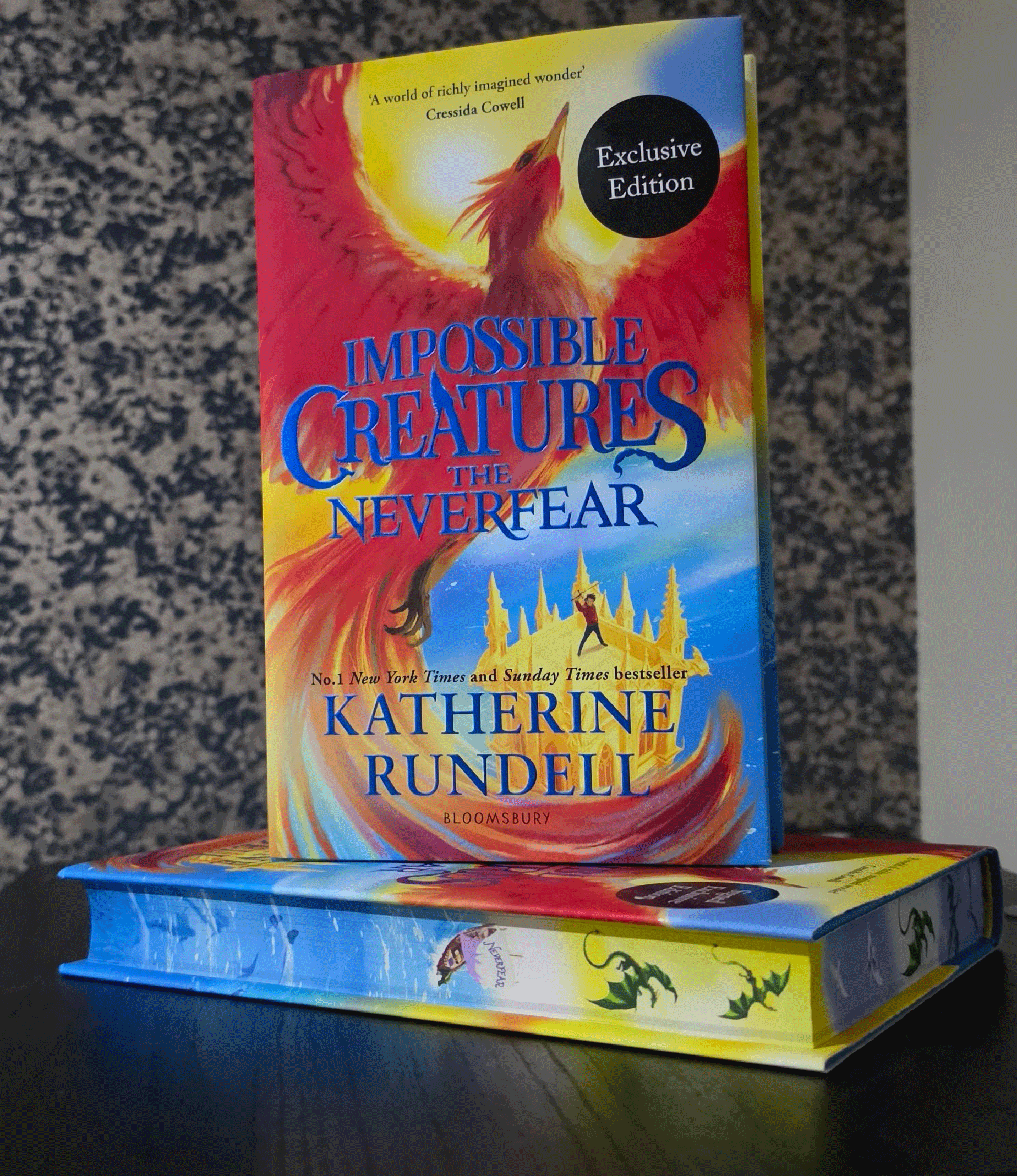
The unsigned version of the exclusive, same sprayed edge without the signature. 368 pages. The most straightforward route to the exclusive edge design, and generally easier to find than the signed version.
View at Waterstones →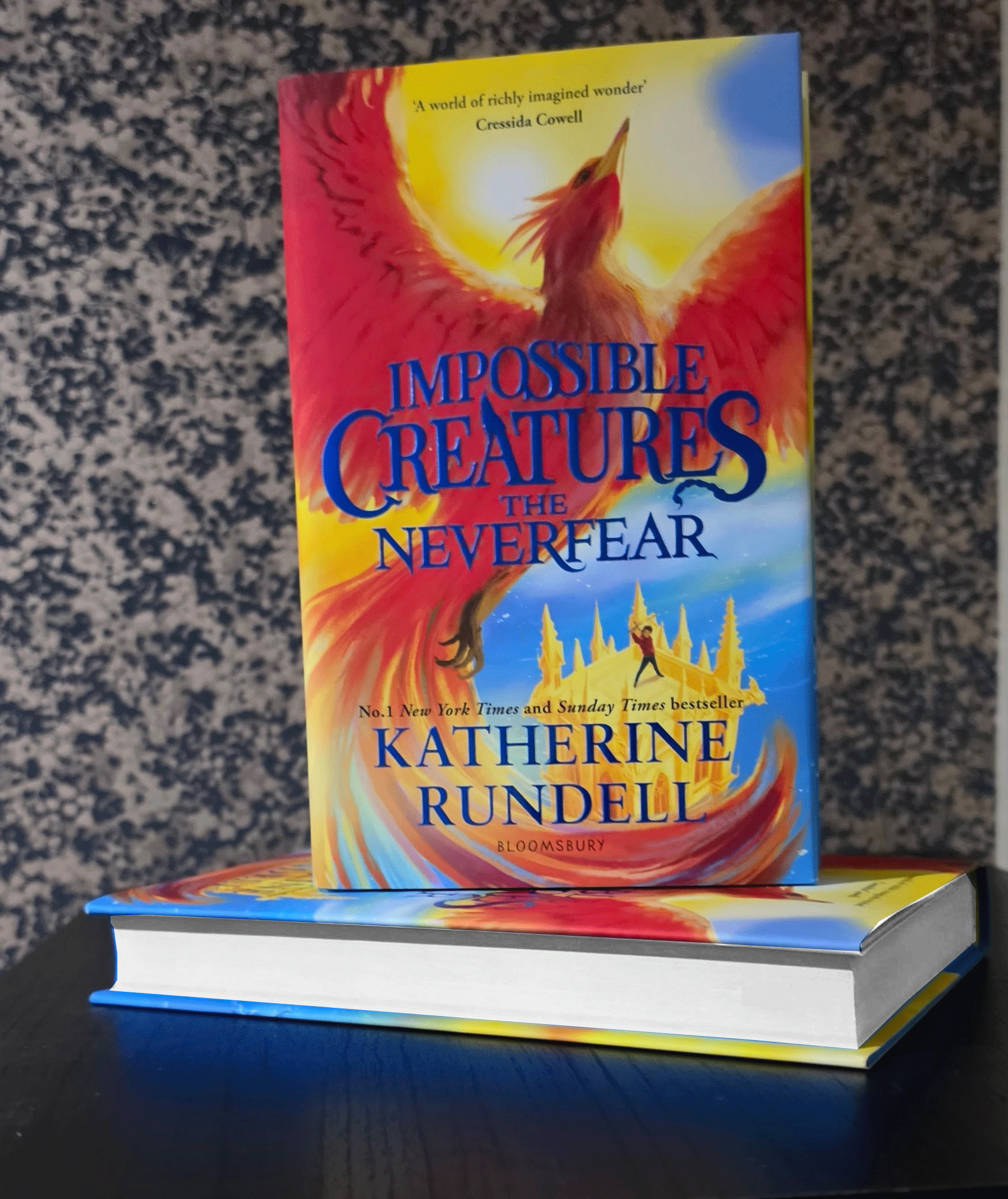 Standard First Edition
The UK trade hardback, described by the publisher as adorned with blue foil. Plain edges, no roundel, sold everywhere. Check the number line on the copyright page for a first printing.
View at Waterstones →North American Editions
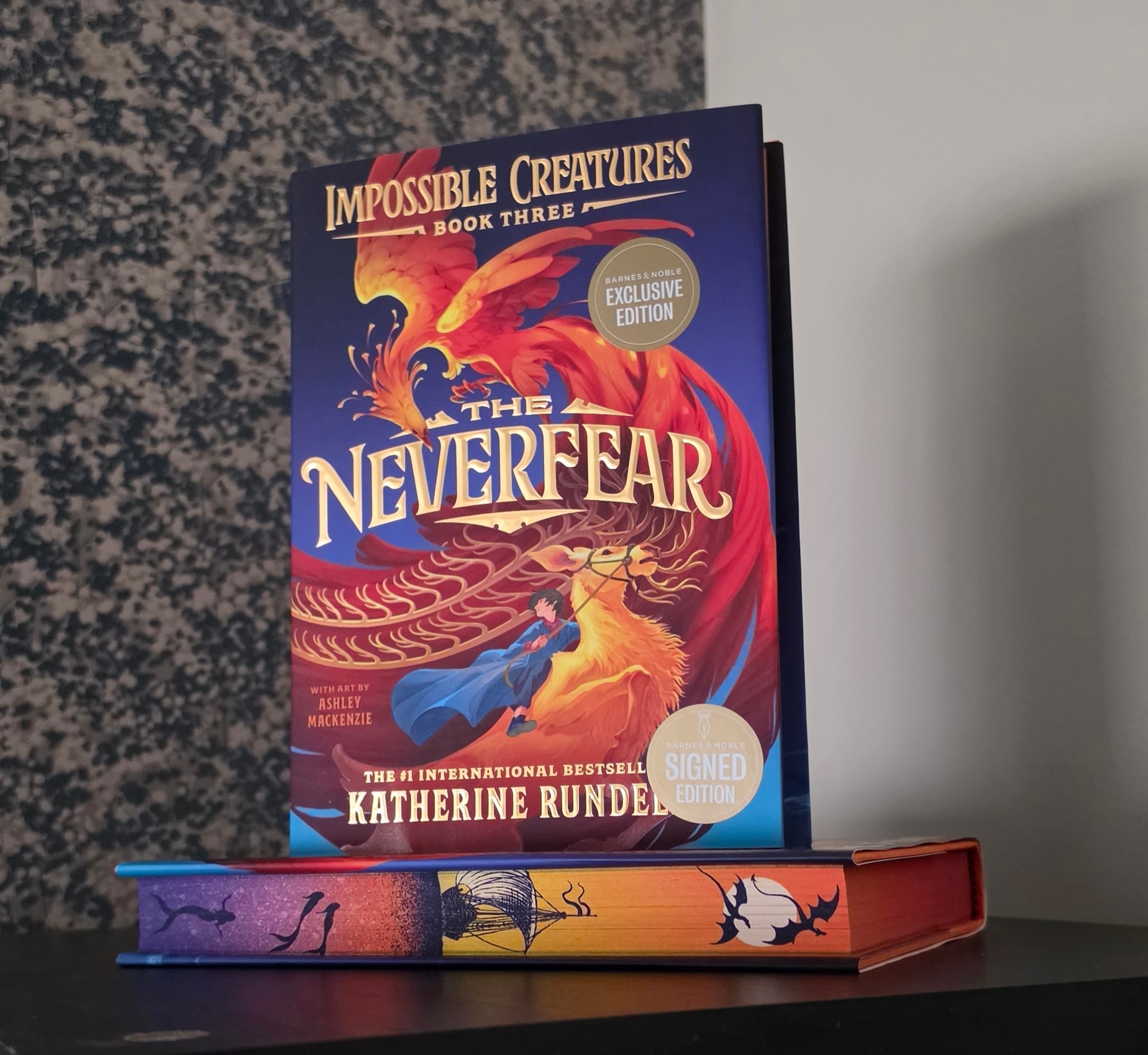
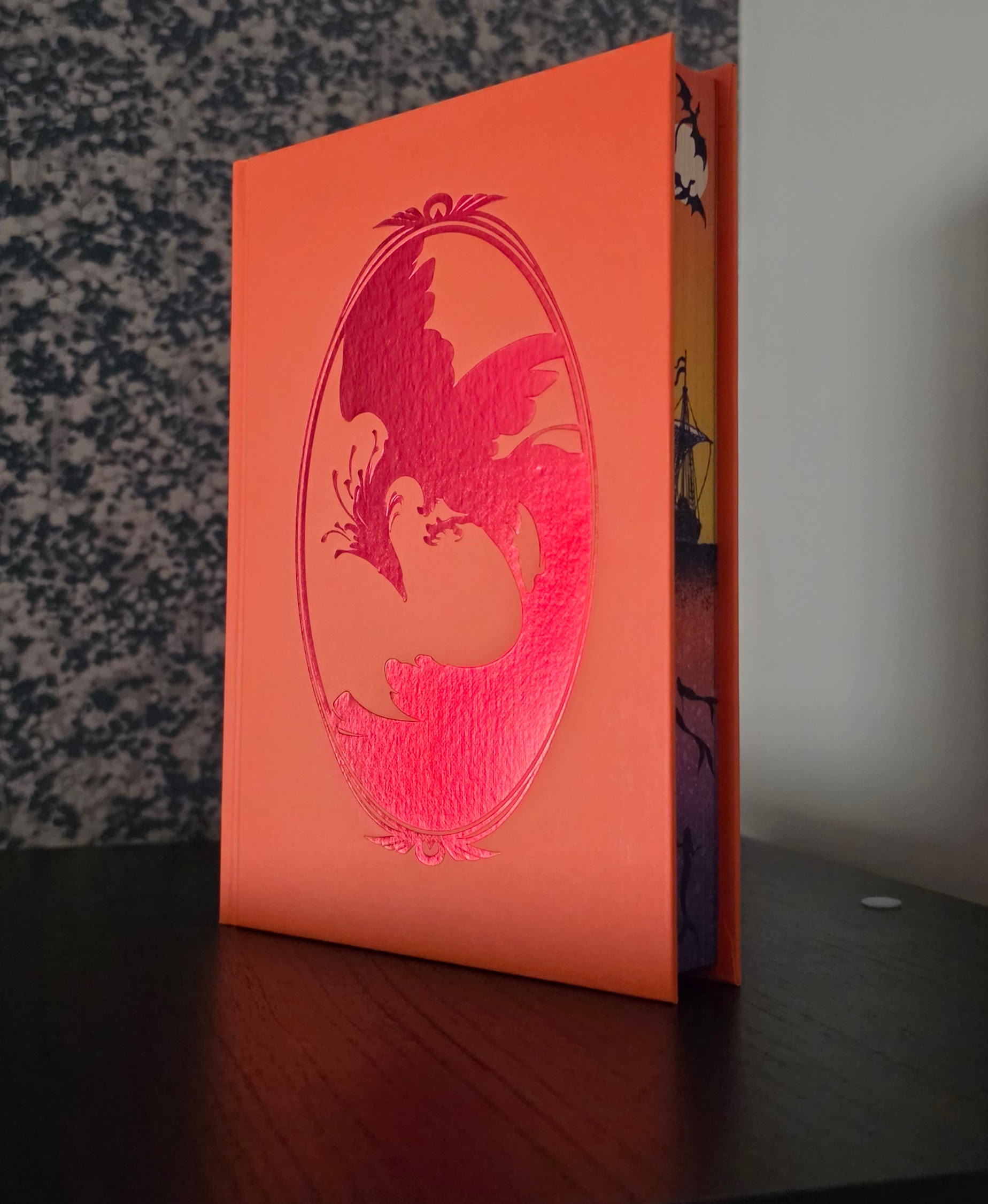
The Barnes and Noble exclusive with a gold Signed Edition roundel added to the jacket alongside the Exclusive Edition roundel. It shares the ISBN of the unsigned exclusive, so the barcode cannot verify a signed copy. The signature and the roundel are what set it apart. Knopf, manufactured in the United States of America, with 1st Printing stated on the copyright page rather than a number line. Orange boards with a red foil phoenix in an oval frame, and sprayed edges running purple to orange with silhouettes of swimmers, a ship and winged creatures.
The US equivalent of the Waterstones exclusive, published 1 September 2026, 304 pages. Purple to orange sprayed edges with silhouettes rather than the red stained edges of the standard Knopf printing, and orange boards with a red foil phoenix beneath the jacket. Sold only through Barnes and Noble, which makes it one of the harder editions to obtain from the UK.
The US trade hardback, published 1 September 2026, 336 pages, art by Ashley Mackenzie. Foil and embossing on the jacket, designed endpapers, stained edges and interior illustrations. A different cover from the UK hardback, so a separate collectible rather than a printing variant.
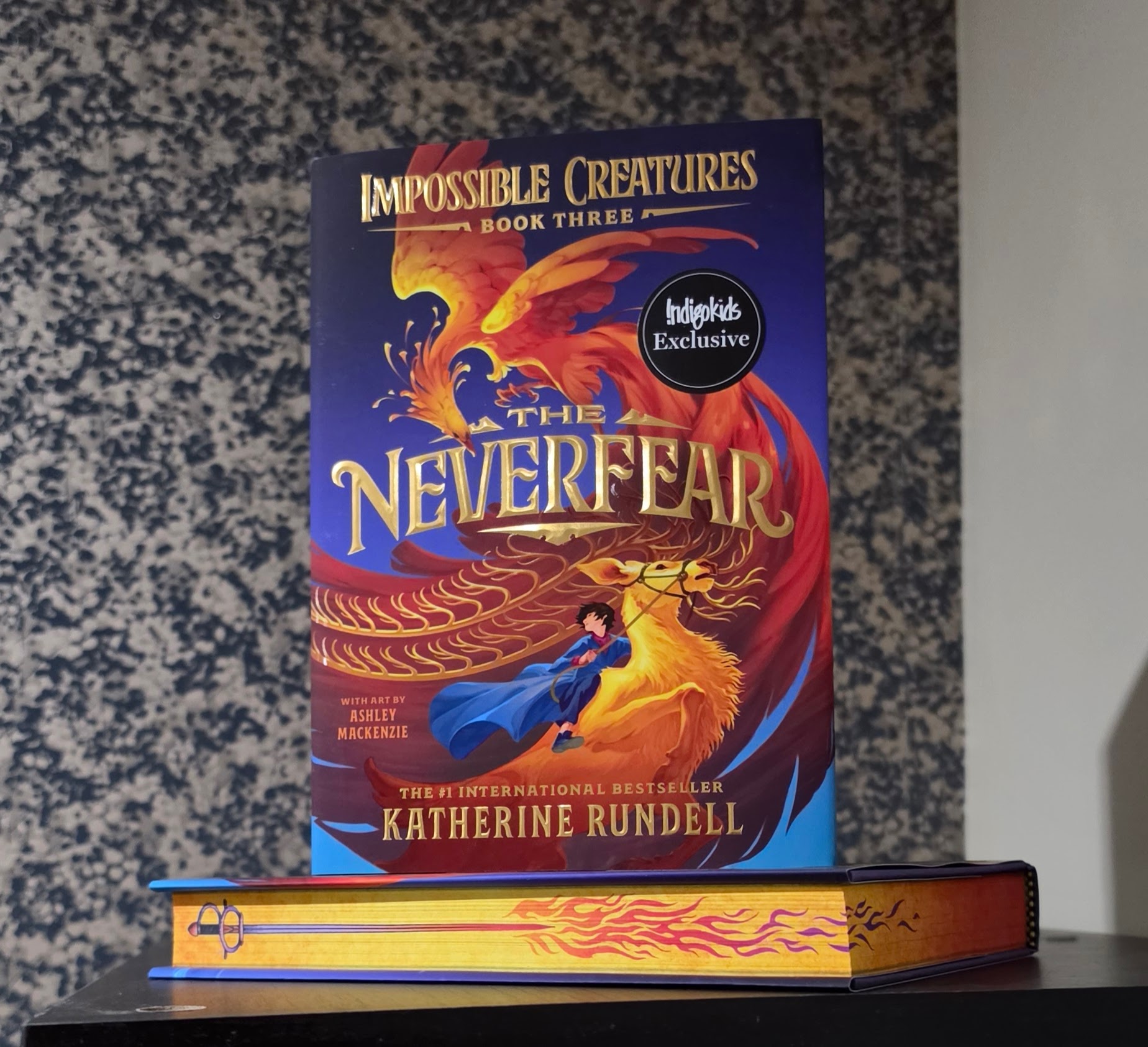
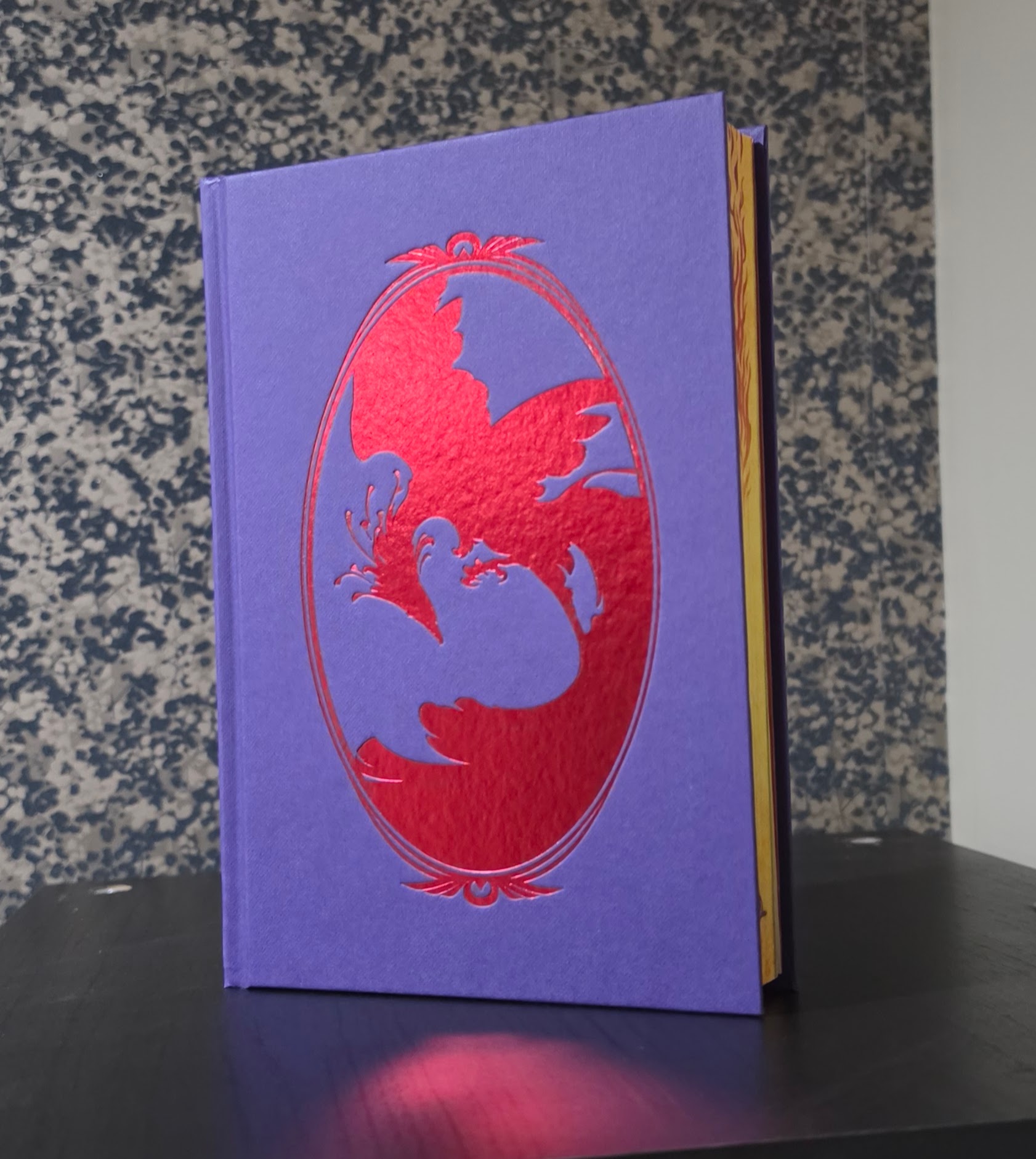
The Canadian exclusive hardback, sold only through Indigo and catalogued on the copyright page as the Indigo Exclusive Edition. Purple boards with a red foil creature medallion under the jacket, stencilled fire edges in gold and orange, and an IndigoKids Exclusive roundel on the jacket. Published by Puffin Canada of the Tundra Book Group rather than Bloomsbury or Knopf, printed in the United States of America. A first printing states 1st Printing on the copyright page instead of carrying a number line, which is the whole test here. The AI and text and data mining reservation is present from the first printing, so it dates nothing. Confirmed in hand. Canada only distribution makes this the hardest Book Three edition to reach from outside the country, and the one that completes a full set.
- Any unsigned edition above can be signed in person at an event. It keeps the ISBN it was issued with.
- A hand-signed exclusive is not a separate edition. Nothing on the barcode distinguishes it.
- A publisher signed edition is issued signed under its own ISBN. Those are listed above.
- Event copies are often stamped as well as signed, usually to the title page or front endpaper, sometimes dated.
- Of the UK editions, only the indie ones have foil boards under the jacket. Every other UK edition has plain boards, so a jacketless copy can still be identified. The US printings all have coloured boards with foil, and the colour differs by edition.
Before Publication
Advance Proofs
Bloomsbury circulates uncorrected proof copies of each book to reviewers, booksellers and press ahead of publication. Proofs are paperback, usually carry a plainer cover treatment than the finished book, and are marked not for sale. The text can differ from the published version. They are printed in small numbers and never sold in shops, which is what makes them worth having once the finished book is out.
Buying Guidance
Collector's Checklist
The S suffix is a shop listing, not an ISBN. Across all three books, the signed independent bookshop edition is printed with the standard trade ISBN. Some indie websites append an S to their own listing to mark it as the signed version, but nothing on the book says so and the barcode is identical to the trade hardback. The same is true of the US indie sprayed edition of The Poisoned King. Photographs of the signature and the edges are the only proof.
Check the top and bottom edges on Book One. The two Waterstones exclusives look near identical from the front. White top and bottom edges mean the earlier and scarcer 9781526675255, which is also the edge colour of the signed 9781526668981. Blue top and bottom means the later 9781526677006, which was made after the award and carries the Book of the Year banner on its jacket. Between those two, the banner and the edge colour agree with each other, so either will tell you which exclusive a seller actually has.
Signed and exclusive are not the same word. Every Waterstones exclusive in this series has an unsigned twin with the same edge design. Listings routinely describe the unsigned version as the signed one. Match the barcode to the ISBN above before paying a signed premium.
Trust photographs over descriptions. Sprayed edges, foil, printed foredges and endpapers should be visible in photographs of the copy being sold, not merely described in the blurb.
Check the number line. On the copyright page, a number line ending in 1 usually indicates a first printing.